期刊名称:NPJ SCHIZOPHRENIA
 期刊简介(About the journal)
投稿须知(Instructions to Authors)
编辑部信息(Editorial Board) 期刊简介(About the journal)
投稿须知(Instructions to Authors)
编辑部信息(Editorial Board)
About the journal
Aims & Scope
npj Schizophrenia is an international, peer-reviewed journal that aims to publish high-quality original papers and review articles relevant to all aspects of schizophrenia and psychosis, from molecular and basic research through environmental or social research, to translational and treatment-related topics. npj Schizophrenia publishes papers on the broad psychosis spectrum including affective psychosis, bipolar disorder, the at-risk mental state, psychotic symptoms and overlap between psychotic and other disorders.
Instructions to Authors
This section will help you when preparing your manuscript for initial submission and resubmission to npj Schizophrenia. Please ensure that you familiarise yourself with our editorial policies as outlined in our Guide for Authors before submitting your work. An overview of key information on submitting primary research is also available in our brief guide to manuscript submission in PDF format.
For information on our aims and scope, as well as our content types, please refer to the About the journal section.
All manuscripts must be submitted electronically through our online submission system, from which you can upload the cover letter and manuscript files (text, figures and supplementary information, including video) and check on the status of your manuscripts during the review process.
Revised manuscripts should be uploaded through the link provided in the editor's decision letter. Please do not submit revisions as new manuscripts.
The authors must include copies of all related manuscripts with any overlap in authorship that are under consideration or in press elsewhere.
Guide for Authors
View our guide for authors for detailed information on editorial criteria, and how manuscripts are handled by our editors between submission and acceptance for publication.
Manuscripts submitted to npj Schizophrenia do not need to adhere to our formatting requirements at the point of initial submission; formatting requirements only apply at the time of acceptance.
 Download Guide for Authors Download Guide for Authors
Editorial Board
Editor-in-Chief
 James H. Meador-Woodruff, MD James H. Meador-Woodruff, MD
Heman E. Drummond Professor and Chairman
Department of Psychiatry
University of Alabama at Birmingham
AL, USA
Dr Meador-Woodruff's research is focused on understanding schizophrenia's impact on various regions of the brain that communicate with each other via chemical signals. Currently, Meador-Woodruff's focus is studying the expression of genes associated with glutamatergic neurotransmission within individual cells in the nervous system. He has published extensively on schizophrenia, including work in animal models, clinical investigations and especially cellular, subcellular and molecular studies in human postmortem brain.
Associate Editors
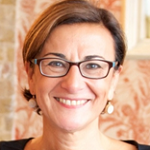 Professor Paola Dazzan, MD, PhD Professor Paola Dazzan, MD, PhD
Department of Psychosis Studies
King's College London
London, UK
Dr Dazzan's main area of interest is the application of brain imaging to the study of the early stages of psychosis, and the relationship between brain, other biological risk factors for psychosis and the biological effects of antipsychotics. She uses techniques, such as structural and functional imaging and diffusion tensor imaging to explore the role of the neurological abnormalities in schizophrenia and the presence of brain changes and their progression in psychosis. She is also currently using multimodal imaging longitudinally to establish neuroimaging biomarkers that can be used as predictors of treatment response to antipsychotic drugs in patients at the first episode of a psychosis.
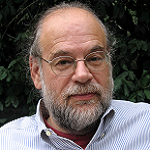 Professor Ariel Y. Deutch, PhD Professor Ariel Y. Deutch, PhD
James G. Blakemore Professor of Psychiatry and Professor of Pharmacology
Vanderbilt University Medical Center
TN, USA
Dr Deutch's primary efforts revolve around the function and dysfunction of forebrain dopamine systems, primarily in schizophrenia and in Parkinson's disease. In particular there are ongoing efforts to understand the loss of dendritic spines on certain prefrontal cortical pyramidal cells and what features explain the differential vulnerability of various populations of prefrontal pyramidal cells to spine loss. Among these studies of the prefrontal cortex, including the orbitofrontal cortex, are investigations of the role of microglial cells in selective pruning of spines during adolescence.
 Professor Daniel Martins-de-Souza, PhD Professor Daniel Martins-de-Souza, PhD
Institute of Biology
University of Campinas (UNICAMP)
Campinas, Brazil
Dr Martins-de-Souza is founding member of the Brazilian Society of Proteomics and part of the board of the Brazilian Society of Mass Spectrometry and Human Proteome Organization (HUPO). Daniel founded the Laboratory of Neuroproteomics funded by the São Paulo Research Foundation (FAPESP) via a Young Investigator Grant. Daniel's lab employs proteomic tools to investigate molecular mechanisms involved in psychiatric disorders and the identification of potential biomarkers.
Editorial Board Members
André Aleman, PhD
University of Groningen
Groningen, Netherlands
Celso Arango, MD, PhD
Hospital General Universitario Gregorio Marañón, CIBERSAM/Universidad Complutense
Madrid, Spain
Kristen Brennand, PhD
Icahn School of Medicine at Mount Sinai
New York, New York, USA
Peter F. Buckley, MD
Virginia Commonwealth University Health System
Richmond, Virginia, USA
Cheryl M. Corcoran, MD
Icahn School of Medicine at Mount Sinai
NY, USA
Michael Davidson, MD
Tel Aviv University
Tel Aviv, Israel
Lynn E. DeLisi, MD
VA Boston Healthcare System
Harvard Medical School
Boston, Massachusetts, USA
Kim Q. Do, PhD
Lausanne University Hospital
Lausanne, Switzerland
Enrico Domenici, PhD
Centre for Integrative Biology, University of Trento
Trento, Italy
Erica Duncan, MD
Emory University School of Medicine
Atlanta, Georgia, USA
Robin Emsley, MD, PhD
University of Stellenbosch
Cape Town, South Africa
Anthony Grace, PhD
University of Pittsburgh
Pittsburgh, Pennsylvania, USA
René S. Kahn, MD, PhD
University Medical Center Utrecht
Utrecht, Netherlands
Kiyoto Kasai, MD, PhD
Graduate School of Medicine, The University of Tokyo
Tokyo, Japan
James Kennedy, MD
CAMH, University of Toronto
Ontario, Canada
Jun Soo Kwon, MD, PhD
Seoul National University College of Medicine
Seoul, Republic of Korea
Adrienne C. Lahti, MD
University of Alabama at Birmingham
Birmingham, Alabama, USA
Stephen R. Marder, MD
Semel Institute for Neuroscience at UCLA and VA Desert Pacific Mental Illness Research, Education, and Clinical Center
Los Angeles, California, USA
Patrick McGorry, MD, PhD
Orygen: National Centre for Excellence in Youth Mental Health and University of Melbourne
Melbourne, Australia
Holly Moore, PhD
Columbia University
New York, New York, USA
Robin M. Murray, MD, PhD
King's College London
London, UK
Panos Roussos, MD, PhD
Icahn School of Medicine at Mount Sinai
New York, New York, USA
Akira Sawa, MD, PhD
Johns Hopkins University School of Medicine
Baltimore, Maryland, USA
Cynthia Shannon Weickert, PhD
University of New South Wales
Sydney, Australia
Dame Til Wykes, PhD
King's College London
London, UK
Alison Yung, MD, PhD
The University of Manchester
Manchester, UK
Nature Research
Managing Editor: Wanda Layman, PhD
Editorial Director, Life Sciences, Community Journals, NPJs: Arianne Heinrichs, PhD
Peer Review Assistants: Priyanka De, Ayesha Pathan
Editorial Assistants: Rosie Tobutt and Caterina Timu
Senior Editorial Assistant: Molly Jiang
Editorial Assistant Supervisor: Yasmin Esmaeili
Editorial Administration Manager: Colm Pollard
Publisher/Director, Strategic Partnerships Americas & Global NPJs: Andrea Macaluso
Assistant Production Editor: Annabelle Topliss
Production Editors: David Pentney and Annika Jesse
Senior Production Editor: Jessica Hart
Managing Production Editor: Kate Neil
Operations and Partnerships Manager: Esther Trinh
Senior Marketing Manager: Heather Dunphy
Head of Researcher Experience: Katherine Arundell
VP Editorial, Nature Research and Community Journals: Meredith LeMasurier, PhD
VP Commerical, Nature Research Group: Andrew Douglas
Chief Editorial Advisor, Nature Research: Magdalena Skipper, PhD
| 
