期刊名称:PHYSICAL REVIEW APPLIED
 期刊简介(About the journal)
投稿须知(Instructions to Authors)
编辑部信息(Editorial Board) 期刊简介(About the journal)
投稿须知(Instructions to Authors)
编辑部信息(Editorial Board)
About the journal
Physical Review Applied
Aim and Scope
Physical Review Applied publishes high-quality papers that bridge the gap between engineering and physics, between industry and academia, and between current and future technologies. It welcomes studies in conventional applied physics, and reaches beyond by inviting papers by physicists working on problems in engineering, and by engineers investigating the physics of their systems. Combining the best in physics with the best in engineering will strengthen both disciplines, provide new insights, foster new approaches, and promote new collaborations.
Topics of interest include, but are not limited to, the following.
Biophysics, bioengineering, and biomedical materials
Device physics
Energy technology, including renewable energy, storage, and power generation
High-pressure physics and geophysics
Industrial physics
Magnetism and spintronics
Materials science, including alloys, composites, glasses, and polymers
Metamaterials
Microfluidics and complex fluids
Morphogenesis and pattern formation, in nature and in manufactured materials
Nanoscience and nanotechnology
Optics, optoelectronics, photonics, and laser physics
Quantum information processing, both algorithms and hardware
Soft matter physics, including granular and colloidal applications and active matter
Physical Review Applied publishes research with strong and clear ties to concrete applications, and offering fresh insight from or about physics. We encourage forward-looking scientists engaged in applied research to consider this journal their home for stimulating scholarly publications and discussion.
Journal Metrics
Immediacy Index: 0.585
2014 Number of Published Articles: 116
2014 Number of Published Pages: 986
2015 Projected Number of Articles: 200
2015 Projected Number of Pages: 1,600
Features
- Designated publishing option for applied research
- Includes Letters, Research Articles, and Review Articles
- Articles published online as they become available, and collected in monthly issues
- Contextual summary and image included for every article
- Editors’ Suggestions highlighting papers of particular interest
- Exceptional articles featured in Physics
- Diverse Editorial Board
- Email alerts via your APS Journal Account
- RSS feeds available
Interested in Physical Review Applied?
Extended trials available, contact subs@aps.org for more information.
Instructions to Authors
February 2014
Information for Authors
General Information
Manuscript Preparation
Basic Information
Length Limits
Supplemental Material
Manuscript Submission
Review Process
Post Acceptance
Editorial Board
Physical Review Applied Staff
Troy Shinbrot, Editor
Rutgers, The State University of New Jersey, East Brunswick, NJ, USA
 Presently a Professor in the Biomedical Engineering Department at Rutgers, Shinbrot received his Ph.D. in Physics from the University of Maryland. His research interests are in aspects of chaos and fluid dynamics, particularly granular flow, and he has also published work in soft matter, bioengineering, applied mathematics, and chemical engineering. Shinbrot teaches Bioengineering, Mathematical Modeling, Scientific Ethics and Engineering Writing. He was named an Outstanding Referee of the Physical Review Journals in 2008. Presently a Professor in the Biomedical Engineering Department at Rutgers, Shinbrot received his Ph.D. in Physics from the University of Maryland. His research interests are in aspects of chaos and fluid dynamics, particularly granular flow, and he has also published work in soft matter, bioengineering, applied mathematics, and chemical engineering. Shinbrot teaches Bioengineering, Mathematical Modeling, Scientific Ethics and Engineering Writing. He was named an Outstanding Referee of the Physical Review Journals in 2008.
Julie Kim-Zajonz, Managing Editor
American Physical Society, Ridge, NY, USA
 Julie Kim-Zajonz received her Ph.D. from the University of Munich, working on high-pressure x-ray diffraction. She was born in Hong Kong, has Korean ancestry, and grew up in England, Hong Kong, and Los Angeles. She began working for Physical Review B in 1999, and has been Editor of PRB Rapid Communications since 2002. As Editor of that section, she handled a wide range of subject areas including semiconductors, metamaterials, surfaces, nanomaterials, and molecular electronics. She joined the Physical Review Applied staff in November of 2013. Julie Kim-Zajonz received her Ph.D. from the University of Munich, working on high-pressure x-ray diffraction. She was born in Hong Kong, has Korean ancestry, and grew up in England, Hong Kong, and Los Angeles. She began working for Physical Review B in 1999, and has been Editor of PRB Rapid Communications since 2002. As Editor of that section, she handled a wide range of subject areas including semiconductors, metamaterials, surfaces, nanomaterials, and molecular electronics. She joined the Physical Review Applied staff in November of 2013.
Matthew D. Eager, Associate Editor
American Physical Society, Ridge, NY, USA
 Matt holds a B.A. from Drew University and a Ph.D. in physical chemistry from Brandeis University, and completed postdoctoral research at Iowa State University. He grew up in New Jersey. In November of 1999 Matt joined the editorial staff of Physical Review B, where he handled many topics in condensed matter physics, including superconductivity and magnetism in the Rapid Communications section, and most recently thermoelectrics. He joined Physical Review Applied in April of 2014. Matt holds a B.A. from Drew University and a Ph.D. in physical chemistry from Brandeis University, and completed postdoctoral research at Iowa State University. He grew up in New Jersey. In November of 1999 Matt joined the editorial staff of Physical Review B, where he handled many topics in condensed matter physics, including superconductivity and magnetism in the Rapid Communications section, and most recently thermoelectrics. He joined Physical Review Applied in April of 2014.
Editorial Board
José Soares Andrade Jr., Complex Systems
Universidade Federal do Ceará, Brazil
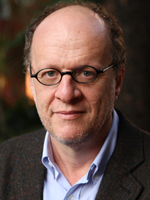 José Soares Andrade Jr. is a Full Professor of Physics at Universidade Federal do Ceará in Brazil. He received his Ph.D. in chemical engineering in 1992 from COPPE at Universidade Federal do Rio de Janeiro. He was a Visiting Scholar at Boston University from 2000 to 2001, and a Visiting Professor (Gastprofessor) at ETH in Switzerland in 2010. His main research interests include transport phenomena, computational and statistical physics, and complex systems, with emphasis on diffusion and flow through porous media, critical phenomena, applications of percolation theory, fractals, complex networks, pulmonary physiology, fragmentation, and fracture formation. José Soares Andrade Jr. is a Full Professor of Physics at Universidade Federal do Ceará in Brazil. He received his Ph.D. in chemical engineering in 1992 from COPPE at Universidade Federal do Rio de Janeiro. He was a Visiting Scholar at Boston University from 2000 to 2001, and a Visiting Professor (Gastprofessor) at ETH in Switzerland in 2010. His main research interests include transport phenomena, computational and statistical physics, and complex systems, with emphasis on diffusion and flow through porous media, critical phenomena, applications of percolation theory, fractals, complex networks, pulmonary physiology, fragmentation, and fracture formation.
Robert L. Byer, Optics
Stanford University
 Robert L. Byer has conducted research and taught classes in lasers and nonlinear optics at Stanford University since 1969 and has made extraordinary contributions to laser science and technology. His current research includes precision laser measurements in support of the detection of gravitational waves and laser “accelerator on a chip.” He is currently the William R. Kenan, Jr., Professor of the School of Humanities and Sciences, Department of Applied Physics at Stanford University. He has served as President of the American Physical Society, of the Optical Society of America and of the IEEE LEOS. He was the Vice Provost and Dean of Research at Stanford, and has also been Chair of the Department of Applied Physics, Director of the Edward L. Ginzton Laboratory and Director of the Hansen Experimental Physics Laboratory. He is a founding member of the California Council on Science and Technology and served as Chair from 1995 to 1999. He was a member of the Air Force Scientific Advisory Board from 2002 to 2006 and has been a member of the National Ignition Facility since 2000. Robert L. Byer has conducted research and taught classes in lasers and nonlinear optics at Stanford University since 1969 and has made extraordinary contributions to laser science and technology. His current research includes precision laser measurements in support of the detection of gravitational waves and laser “accelerator on a chip.” He is currently the William R. Kenan, Jr., Professor of the School of Humanities and Sciences, Department of Applied Physics at Stanford University. He has served as President of the American Physical Society, of the Optical Society of America and of the IEEE LEOS. He was the Vice Provost and Dean of Research at Stanford, and has also been Chair of the Department of Applied Physics, Director of the Edward L. Ginzton Laboratory and Director of the Hansen Experimental Physics Laboratory. He is a founding member of the California Council on Science and Technology and served as Chair from 1995 to 1999. He was a member of the Air Force Scientific Advisory Board from 2002 to 2006 and has been a member of the National Ignition Facility since 2000.
Mildred Dresselhaus, Condensed Matter Physics
Massachusetts Institute of Technology (MIT)
 Mildred Dresselhaus is an Institute Professor at MIT in the departments of Electrical Engineering and Physics. Recent research activities in the Dresselhaus group that have attracted wide attention are in the areas of carbon nanotubes, bismuth nanowires, and low-dimensional thermoelectricity. She is a member of the National Academy of Sciences, the National Academy of Engineering, and has served as Director of the Department of Energy Office of Science, President of the American Physical Society, Treasurer of the National Academy of Sciences, President of the American Association for the Advancement of Science, Chair of the National Academy Decadal Study of Condensed Matter and Materials Physics, and on many advisory committees and councils. Dr. Dresselhaus has received numerous awards, including the National Medal of Science, the Fermi Award, the Kavli Award, the Presidential Medal of Freedom, and 31 honorary doctorates worldwide. She is the coauthor of six books on carbon science and is particularly well known for her work on carbon nanotubes and other nanostructural systems. Her research over the years has covered a wide range of problems in condensed matter and materials physics. Mildred Dresselhaus is an Institute Professor at MIT in the departments of Electrical Engineering and Physics. Recent research activities in the Dresselhaus group that have attracted wide attention are in the areas of carbon nanotubes, bismuth nanowires, and low-dimensional thermoelectricity. She is a member of the National Academy of Sciences, the National Academy of Engineering, and has served as Director of the Department of Energy Office of Science, President of the American Physical Society, Treasurer of the National Academy of Sciences, President of the American Association for the Advancement of Science, Chair of the National Academy Decadal Study of Condensed Matter and Materials Physics, and on many advisory committees and councils. Dr. Dresselhaus has received numerous awards, including the National Medal of Science, the Fermi Award, the Kavli Award, the Presidential Medal of Freedom, and 31 honorary doctorates worldwide. She is the coauthor of six books on carbon science and is particularly well known for her work on carbon nanotubes and other nanostructural systems. Her research over the years has covered a wide range of problems in condensed matter and materials physics.
Paul A. Fleury, Condensed Matter Physics
Yale University
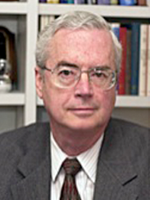 Paul A. Fleury is the Frederick William Beinecke Professor of Engineering and Applied Physics, and Dean Emeritus of the Yale School of Engineering and Applied Science. Prior to joining Yale in 2000, he served as Engineering Dean at the University of New Mexico, following 30 years of research and management at AT&T Bell Laboratories and Sandia National Laboratories. His earlier research focused on nonlinear optics, laser spectroscopy and phase transformations in condensed matter systems. He is a fellow of the American Physical Society and the Association for the Advancement of Science, and a member of the National Academy of Engineering, the National Academy of Sciences and a Fellow of the American Academy of Arts and Sciences. He received the 1985 Michelson-Morley Award and the 1992 Frank Isakson Prize of the American Physical Society for his research on optical phenomena and phase transitions in condensed matter systems. He received his Bachelor of Science and Master of Science degrees in 1960 and 1962 from John Carroll University, and his doctorate from the Massachusetts Institute of Technology in 1965 - all in Physics. Paul A. Fleury is the Frederick William Beinecke Professor of Engineering and Applied Physics, and Dean Emeritus of the Yale School of Engineering and Applied Science. Prior to joining Yale in 2000, he served as Engineering Dean at the University of New Mexico, following 30 years of research and management at AT&T Bell Laboratories and Sandia National Laboratories. His earlier research focused on nonlinear optics, laser spectroscopy and phase transformations in condensed matter systems. He is a fellow of the American Physical Society and the Association for the Advancement of Science, and a member of the National Academy of Engineering, the National Academy of Sciences and a Fellow of the American Academy of Arts and Sciences. He received the 1985 Michelson-Morley Award and the 1992 Frank Isakson Prize of the American Physical Society for his research on optical phenomena and phase transitions in condensed matter systems. He received his Bachelor of Science and Master of Science degrees in 1960 and 1962 from John Carroll University, and his doctorate from the Massachusetts Institute of Technology in 1965 - all in Physics.
Stephen R. Forrest, Optics
University of Michigan
 Stephen Forrest is the Vice President for Research, and the William Gould Dow Collegiate Professor in Electrical Engineering, Materials Science and Engineering, and Physics at the University of Michigan. He received his Ph.D. in Physics in 1979 at the University of Michigan after which he joined Bell Labs, where he investigated photodetectors for optical communications. He was also part of the Electrical Engineering and Materials Science Departments at the University of Southern California where he worked on optoelectronic integrated circuits, and organic semiconductors. In 1992, he became the James S. McDonnell Distinguished University Professor of Electrical Engineering at Princeton University, where he went on to serve as Chair of the department from 1997 to 2001. He was also director of the National Center for Integrated Photonic Technology, Director of Princeton’s Center for Photonics and Optoelectronic Materials (POEM) and the CSM Visiting Professor of Electrical Engineering at the National University of Singapore. He is a Fellow of the APS, IEEE and OSA and a member of the National Academy of Engineering, and is co-founder or founding participant in several companies, including Sensors Unlimited, Epitaxx, Inc., NanoFlex Power Corp., Universal Display Corp. (NASDAQ: PANL) and ASIP, Inc., and is on the Board of Directors of Applied Materials and PD-LD, Inc. Stephen Forrest is the Vice President for Research, and the William Gould Dow Collegiate Professor in Electrical Engineering, Materials Science and Engineering, and Physics at the University of Michigan. He received his Ph.D. in Physics in 1979 at the University of Michigan after which he joined Bell Labs, where he investigated photodetectors for optical communications. He was also part of the Electrical Engineering and Materials Science Departments at the University of Southern California where he worked on optoelectronic integrated circuits, and organic semiconductors. In 1992, he became the James S. McDonnell Distinguished University Professor of Electrical Engineering at Princeton University, where he went on to serve as Chair of the department from 1997 to 2001. He was also director of the National Center for Integrated Photonic Technology, Director of Princeton’s Center for Photonics and Optoelectronic Materials (POEM) and the CSM Visiting Professor of Electrical Engineering at the National University of Singapore. He is a Fellow of the APS, IEEE and OSA and a member of the National Academy of Engineering, and is co-founder or founding participant in several companies, including Sensors Unlimited, Epitaxx, Inc., NanoFlex Power Corp., Universal Display Corp. (NASDAQ: PANL) and ASIP, Inc., and is on the Board of Directors of Applied Materials and PD-LD, Inc.
Joseph W. Freeman, Biomedical Engineering
Rutgers, The State University of New Jersey
 Joseph Freeman is an Associate Professor of Biomedical Engineering at Rutgers University. He earned his Ph.D. in Biomedical Engineering from Rutgers University and the University of Medicine and Dentistry of New Jersey (UMDNJ) in Piscataway, New Jersey. His research interests include musculoskeletal regenerative medicine, tissue mechanics, and molecular modeling. He is a 2006 Ford Fellow recipient of a 2008 W. H. Coulter Foundation Early Career Translational Research Award. Joseph Freeman is an Associate Professor of Biomedical Engineering at Rutgers University. He earned his Ph.D. in Biomedical Engineering from Rutgers University and the University of Medicine and Dentistry of New Jersey (UMDNJ) in Piscataway, New Jersey. His research interests include musculoskeletal regenerative medicine, tissue mechanics, and molecular modeling. He is a 2006 Ford Fellow recipient of a 2008 W. H. Coulter Foundation Early Career Translational Research Award.
Jorge Íñiguez, Condensed Matter Physics
Luxembourg Institute of Science and Technology (LIST), Luxembourg
 Jorge Íñiguez is a condensed-matter theorist conducting research at Luxembourg Institute of Science and Technology (LIST), Luxembourg. He received his Ph.D. in Physical Sciences from the University of the Basque Country, Spain. His work focuses on the development and application of first-principles methods for the study and computational design of functional oxides, including ferroelectrics, magnetoelectric multiferroics, and materials undergoing metal-insulator transitions,. Interface-driven phenomena in nanostructured materials and emergent effects at ferroic domain walls are among his current topics of interest. Jorge Íñiguez is a condensed-matter theorist conducting research at Luxembourg Institute of Science and Technology (LIST), Luxembourg. He received his Ph.D. in Physical Sciences from the University of the Basque Country, Spain. His work focuses on the development and application of first-principles methods for the study and computational design of functional oxides, including ferroelectrics, magnetoelectric multiferroics, and materials undergoing metal-insulator transitions,. Interface-driven phenomena in nanostructured materials and emergent effects at ferroic domain walls are among his current topics of interest.
Heinrich Jaeger, Soft Matter Physics
The University of Chicago
 Heinrich Jaeger is the William J. Friedman and Alicia Townsend Professor of Physics at the University of Chicago. His current research focuses on investigations of self-assembled nanoparticle-based structures, on the rheology of dense suspensions, and on studies of the packing and flow properties of granular materials. Heinrich Jaeger is the William J. Friedman and Alicia Townsend Professor of Physics at the University of Chicago. His current research focuses on investigations of self-assembled nanoparticle-based structures, on the rheology of dense suspensions, and on studies of the packing and flow properties of granular materials.
Kai-Li Jiang, Condensed Matter Physics
Tsinghua University, China
 Kai-li Jiang received his bachelors, masters and Ph.D degrees from Tsinghua University, Beijing, China. He was appointed as an assistant professor at Tsinghua University in 1998, and became a full professor of Physics Department at the same university in 2008. His group focuses on the growth mechanisms, controlled synthesis, physical properties and applications of carbon nanotubes. Kai-li Jiang received his bachelors, masters and Ph.D degrees from Tsinghua University, Beijing, China. He was appointed as an assistant professor at Tsinghua University in 1998, and became a full professor of Physics Department at the same university in 2008. His group focuses on the growth mechanisms, controlled synthesis, physical properties and applications of carbon nanotubes.
Dennis D. Klug, Materials Science
The National Research Council Canada (NRC), Canada
 Dennis Klug is a Principal Research Officer and Theory and Computation Group Leader at the National Research Council of Canada in Ottawa. He received his Ph.D. in 1968 in theoretical physical chemistry studies of dielectric fluids from the University of Wisconsin, Madison, Wisconsin, USA. He then joined the National Research Council of Canada as a postdoctoral researcher where he carried out research on high pressure physics and chemistry studies of molecular solids. His current research areas now span both first-principles theoretical and experimental studies of structures and properties of novel crystalline and amorphous solids under extreme conditions. He has published more than 240 papers in these fields and is cited as an Outstanding Referee by the American Physical Society. Dennis Klug is a Principal Research Officer and Theory and Computation Group Leader at the National Research Council of Canada in Ottawa. He received his Ph.D. in 1968 in theoretical physical chemistry studies of dielectric fluids from the University of Wisconsin, Madison, Wisconsin, USA. He then joined the National Research Council of Canada as a postdoctoral researcher where he carried out research on high pressure physics and chemistry studies of molecular solids. His current research areas now span both first-principles theoretical and experimental studies of structures and properties of novel crystalline and amorphous solids under extreme conditions. He has published more than 240 papers in these fields and is cited as an Outstanding Referee by the American Physical Society.
Gregory P. Meisner, Condensed Matter Physics
General Motors (GM)
 Gregory P. Meisner is a Staff Researcher at General Motors Research and Development where his physics research interests have included magnetism and high performance Nd-Fe-B-based permanent magnets, high-pressure superconductivity, hydrogen storage measurements and materials, and advanced thermoelectrics materials and devices for automotive applications. He is the Principal Investigator for GM’s research projects on thermoelectric technology for automotive waste heat recovery. He is a Fellow of APS and is currently Councilor of the APS Forum on Industrial and Applied Physics. Gregory P. Meisner is a Staff Researcher at General Motors Research and Development where his physics research interests have included magnetism and high performance Nd-Fe-B-based permanent magnets, high-pressure superconductivity, hydrogen storage measurements and materials, and advanced thermoelectrics materials and devices for automotive applications. He is the Principal Investigator for GM’s research projects on thermoelectric technology for automotive waste heat recovery. He is a Fellow of APS and is currently Councilor of the APS Forum on Industrial and Applied Physics.
Jenny Nelson, Renewable Energy
Imperial College London, UK
 Jenny Nelson is a Professor of Physics at Imperial College London, where she has researched novel varieties of material for use in solar cells since 1989. Her current research is focused on understanding the properties of molecular and hybrid semiconductor materials and their application to ‘printable’ solar cells. This work combines fundamental electrical, spectroscopic and structural studies of electronic materials with numerical modeling and device studies, with the aim of optimizing the performance of plastic solar cells. She is also actively working to understand the potential of solar power to reduce carbon emissions. She has published over 200 articles in peer-reviewed journals, several book chapters and a book on the physics of solar cells. Jenny Nelson is a Professor of Physics at Imperial College London, where she has researched novel varieties of material for use in solar cells since 1989. Her current research is focused on understanding the properties of molecular and hybrid semiconductor materials and their application to ‘printable’ solar cells. This work combines fundamental electrical, spectroscopic and structural studies of electronic materials with numerical modeling and device studies, with the aim of optimizing the performance of plastic solar cells. She is also actively working to understand the potential of solar power to reduce carbon emissions. She has published over 200 articles in peer-reviewed journals, several book chapters and a book on the physics of solar cells.
Oliver G. Schmidt, Condensed Matter Physics
Leibniz-Institut für Festkörper- und Werkstoffforschung Dresden (IFW Dresden), Germany
 Oliver G. Schmidt is the Director of the Institute for Integrative Nanosciences at the IFW Dresden, Germany, and holds a Full Professorship for Material Systems for Nanoelectronics at the Chemnitz University of Technology, Germany. His interdisciplinary activities bridge several research fields in the nanosciences, ranging from photonics, electronics and magetnoelectronics to energy storage, robotics and biophysics. He has received several awards: the Otto-Hahn Medal from the Max-Planck Society in 2000, the Philip-Morris Research Award in 2002 and the Carus-Medal from the German Academy of Natural Scientists Leopoldina in 2005. In 2010, he was awarded the Guinness World Record for the smallest man-made jet engine. Most recently in 2014, he was awarded the International Dresden Barkhausen Award 2013 for his work on “Materials, Architectures and Integration of Nanomembranes”. Oliver G. Schmidt is the Director of the Institute for Integrative Nanosciences at the IFW Dresden, Germany, and holds a Full Professorship for Material Systems for Nanoelectronics at the Chemnitz University of Technology, Germany. His interdisciplinary activities bridge several research fields in the nanosciences, ranging from photonics, electronics and magetnoelectronics to energy storage, robotics and biophysics. He has received several awards: the Otto-Hahn Medal from the Max-Planck Society in 2000, the Philip-Morris Research Award in 2002 and the Carus-Medal from the German Academy of Natural Scientists Leopoldina in 2005. In 2010, he was awarded the Guinness World Record for the smallest man-made jet engine. Most recently in 2014, he was awarded the International Dresden Barkhausen Award 2013 for his work on “Materials, Architectures and Integration of Nanomembranes”.
Andrew J. Shields, Quantum Technology
Toshiba Research Europe Limited
 Andrew Shields (FREng, FInstP) is Assistant Managing Director at Toshiba Research Europe Ltd in Cambridge, UK, where he directs R&D on Quantum technology and Nanotechnology. His research interests include quantum photonic devices (for example, quantum light sources, memory, and detectors) as well as applications such as quantum cryptography, communications, imaging, and computing. He has published over 250 peer-reviewed papers in the field of applied physics. Andrew Shields (FREng, FInstP) is Assistant Managing Director at Toshiba Research Europe Ltd in Cambridge, UK, where he directs R&D on Quantum technology and Nanotechnology. His research interests include quantum photonic devices (for example, quantum light sources, memory, and detectors) as well as applications such as quantum cryptography, communications, imaging, and computing. He has published over 250 peer-reviewed papers in the field of applied physics.
Mário G. Silveirinha, Metamaterials
Universidade de Coimbra, Portugal
 Mário Silveirinha is an Associate Professor of Electrical Engineering at the University of Coimbra, Portugal. He received his Ph.D. in Electrical and Computer Engineering (with a minor in Applied Mathematics) from the Instituto Superior Técnico (IST), Technical University of Lisbon, Lisbon, Portugal, in 2003. His research interests span several topical areas that include electromagnetic and quantum metamaterials, plasmonics, and light-matter interactions. Mário Silveirinha is an Associate Professor of Electrical Engineering at the University of Coimbra, Portugal. He received his Ph.D. in Electrical and Computer Engineering (with a minor in Applied Mathematics) from the Instituto Superior Técnico (IST), Technical University of Lisbon, Lisbon, Portugal, in 2003. His research interests span several topical areas that include electromagnetic and quantum metamaterials, plasmonics, and light-matter interactions.
Mark D. Stiles, Condensed Matter Physics
National Institute of Standards and Technology (NIST)
 Mark Stiles is a Fellow in the Center for Nanoscale Science and Technology at the National Institute of Standards and Technology. He uses a variety of theoretical approaches to compute the properties of nanoscale devices, particularly magnetoelectronic devices. He is a Fellow of the American Physical Society and was named an Outstanding Referee for Physical Review journals. Mark Stiles is a Fellow in the Center for Nanoscale Science and Technology at the National Institute of Standards and Technology. He uses a variety of theoretical approaches to compute the properties of nanoscale devices, particularly magnetoelectronic devices. He is a Fellow of the American Physical Society and was named an Outstanding Referee for Physical Review journals.
Thomas Vogt, Materials Science
University of South Carolina (USC)
 Thomas Vogt is the Director of the NanoCenter and also Education Foundation Distinguished Professor in the Department of Chemistry and Biochemistry at the University of South Carolina. He received his Ph.D. in Chemistry from the University of Tübingen in Germany in 1987, after which he worked at the Institut Laue-Langevin in Grenoble, France. In 1995, he joined Brookhaven National Laboratory and became the leader of the Materials Synthesis & Characterization Group in the Physics Department. He also directed initial Materials Science efforts at the Center for Functional Nanomaterials. He joined the University of South Carolina in 2005. He is a fellow of the American Physical Society and the American Association for the Advancement of Science. His current research focuses on structure-composition-property relationships of new materials and he has worked extensively in materials science, solid-state chemistry and physics, with a focus on developing and applying neutron, x-ray, and electron diffraction and imaging techniques. Thomas Vogt is the Director of the NanoCenter and also Education Foundation Distinguished Professor in the Department of Chemistry and Biochemistry at the University of South Carolina. He received his Ph.D. in Chemistry from the University of Tübingen in Germany in 1987, after which he worked at the Institut Laue-Langevin in Grenoble, France. In 1995, he joined Brookhaven National Laboratory and became the leader of the Materials Synthesis & Characterization Group in the Physics Department. He also directed initial Materials Science efforts at the Center for Functional Nanomaterials. He joined the University of South Carolina in 2005. He is a fellow of the American Physical Society and the American Association for the Advancement of Science. His current research focuses on structure-composition-property relationships of new materials and he has worked extensively in materials science, solid-state chemistry and physics, with a focus on developing and applying neutron, x-ray, and electron diffraction and imaging techniques.
Haoshen Zhou, Renewable Energy
National Institute of Advanced Industrial Science and Technology (AIST), Japan
 Haoshen Zhou graduated from the Department of Physics, Nanjing University, China, in 1985. He received his Ph.D. from the University of Tokyo, Japan, in 1994. He is now the principal senior researcher of the Energy Technology Research Institute (ETRI) and leader of the Energy Interface Technology Group at the National Institute of Advanced Industrial Science and Technology (AIST), Japan. He is also a joint professor at both Nanjing University and the University of Tokyo. His research interests include the synthesis of functional materials and their applications in lithium ion batteries, metal–air batteries, new type batteries/cells, fuel cells, dye-sensitized solar cells, hydrophobic/hydrophilic surfaces, and electrochemical sensors. Haoshen Zhou graduated from the Department of Physics, Nanjing University, China, in 1985. He received his Ph.D. from the University of Tokyo, Japan, in 1994. He is now the principal senior researcher of the Energy Technology Research Institute (ETRI) and leader of the Energy Interface Technology Group at the National Institute of Advanced Industrial Science and Technology (AIST), Japan. He is also a joint professor at both Nanjing University and the University of Tokyo. His research interests include the synthesis of functional materials and their applications in lithium ion batteries, metal–air batteries, new type batteries/cells, fuel cells, dye-sensitized solar cells, hydrophobic/hydrophilic surfaces, and electrochemical sensors.
|

