期刊名称:SIGNAL TRANSDUCTION AND TARGETED THERAPY
 期刊简介(About the journal)
投稿须知(Instructions to Authors)
编辑部信息(Editorial Board) 期刊简介(About the journal)
投稿须知(Instructions to Authors)
编辑部信息(Editorial Board)
About the journal
Signal Transduction and Targeted Therapy (ISSN 2059-3635 (online), ISSN 2095-9907 (print), CN 51-1758/R) is an open access journal, which aims to accomplish timely publication of the latest discoveries and progress in both basic science and clinical research related to signal transduction and targeted therapy. It will include research on major human diseases, such as cancer, autoimmune disorders and others.
Signal Transduction and Targeted Therapy is a multidisciplinary journal, covering topics including but not limited to molecular biology, cell biology, pharmacology, medicinal chemistry, computational chemistry, systems biology, bioinformatics, and clinical medicine.
The editorial team of Signal Transduction and Targeted Therapy is composed of a highly respected editorial board of researchers from across the globe, led by the internationally renowned Professor Carlo M. Croce, together with Professor Kang Zhang and Professor Yu-Quan Wei.
This journal is now indexed in Science Citation Index Expanded (SCIE), Journal Citation Reports/Science Edition, BIOSIS previews, Directory of Open Access Journals (DOAJ), MEDLINE, PubMed Central (PMC) and Scopus.
Aims & Scope
Signal Transduction and Targeted Therapy is an international, peer-reviewed, open-access journal that publishes original research articles and review articles related to all aspects of signal transduction in physiological and pathological processes, as well as signal transduction-targeted therapeutics in the form of biological agents and small molecular drugs used to treat human diseases such as cancer, autoimmune disorders, and others. This journal focuses on cutting-edge advances both experimentally and clinically.
Instructions to Authors
Online Submission
To find out about how to submit an article to Signal Transduction and Targeted Therapy, please read the journal’s specific Guide for Authors.
If your manuscript contains supplementary materials, please also refer to the template for supplementary materials.
If you are ready to submit an article to Signal Transduction and Targeted Therapy, please use our online journal manuscript tracking system.
Please note: For questions or technical difficulties related to the manuscript tracking system, please contact the Helpdesk (not the editorial office) via this page.
Springer Nature has introduced improvements to the manuscript tracking system used on many of our journals, designed to streamline your accounts with Springer Nature journals and conveniently provide you with more information in one place. More information is provided when you log into the manuscript tracking system.
Editorial Board
Editors-in-Chief
Prof. Carlo M. Croce, Institute of Genetics, The Ohio State University, Columbus, Ohio, USA
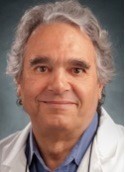 Prof. Carlo M. Croce (M.D.) was born in 1944. He received his B.S. and M.D. degrees from University of Rome in 1967 and 1969, respectively. In 1970, he joined the Wistar Institute of Anatomy and Biology as an associate scientist. He became a faculty member in 1971, and was promoted to professor in 1976 and associate director in 1980. In 1991, Dr. Croce was recruited as director of Kimmel Cancer Institute/Kimmel Cancer Center, Thomas Jefferson University. In 2004, Dr. Croce became John W. Wolfe Chair in Human Cancer Genetics, Chairman of the Department of Molecular Virology, Immunology and Medical Genetics, and Director of the Institute of Genetics, The Ohio State University. He has published more than 1000 papers in international journals including Science, Nature, Cell, New Engl J Med, JAMA, and Cancer Cell. His research has yielded 62 issued U.S. patents. Dr. Croce is a member of the American Academy of Arts and Sciences, the American Association for the Advancement of Science, The National Academy of Sciences, the Institute of Medicine, and AACR Academy. He was an Editor-in-Chief of Cancer Research (1990-1999). Prof. Carlo M. Croce (M.D.) was born in 1944. He received his B.S. and M.D. degrees from University of Rome in 1967 and 1969, respectively. In 1970, he joined the Wistar Institute of Anatomy and Biology as an associate scientist. He became a faculty member in 1971, and was promoted to professor in 1976 and associate director in 1980. In 1991, Dr. Croce was recruited as director of Kimmel Cancer Institute/Kimmel Cancer Center, Thomas Jefferson University. In 2004, Dr. Croce became John W. Wolfe Chair in Human Cancer Genetics, Chairman of the Department of Molecular Virology, Immunology and Medical Genetics, and Director of the Institute of Genetics, The Ohio State University. He has published more than 1000 papers in international journals including Science, Nature, Cell, New Engl J Med, JAMA, and Cancer Cell. His research has yielded 62 issued U.S. patents. Dr. Croce is a member of the American Academy of Arts and Sciences, the American Association for the Advancement of Science, The National Academy of Sciences, the Institute of Medicine, and AACR Academy. He was an Editor-in-Chief of Cancer Research (1990-1999).
Prof. Kang Zhang, Center for Biomedicine and Innovations at Faculty of Medicine, Macau University of Science and Technology, China
 Kang Zhang, MD, PhD is the Professor and Director of Center for Biomedicine and Innovations at Faculty of Medicine, Macau University of Science and Technology. Dr. Zhang obtained his M.D. with Magna Cum Laude honors from Harvard Medical School and MIT joint MD program and his PhD in genetics from Harvard University. He did his postdoctoral training also at Harvard. He completed his residency in ophthalmology at Johns Hopkins University and his retina surgery fellowship at University of Utah. He was a faculty member at Johns Hopkins University, Cleveland Clinic Foundation, University of Utah, and University of California San Diego. Among his honors include AAAS fellow, fellow of American Institute for Medical and Biological Engineering, memberships in Association of American Physicians and American Society of Clinical Investigation; Outstanding Achievement Award of Chinese Ophthalmological Society, Burroughs Wellcome Clinical Scientist Award in Translational Research; Lew R. Wasserman Merit Award and Senior Investigator Award from Research to PreventBlindness; Johns Hopkins Medical Institutions Clinician Scientist Award, the World Ophthalmologist 100 Powerlist, American’s Top Ophthalmologists, Elsevier highly Cited Scholar (2019). Dr. Zhang has published over 200 peer-reviewed manuscripts in top peer-reviewed journals- covering a wide range of topics in genetics, epigenetics, stem cells, nano-engineering and 3D printing, clinical trials, and artificial intelligence. He has more than 26,000 citations and an h-index of 80. His discovery that HTRA1 is a major susceptibility gene for age-related macular degeneration is listed as one of “top-ten breakthroughs in 2006” by Science Magazine. Kang Zhang, MD, PhD is the Professor and Director of Center for Biomedicine and Innovations at Faculty of Medicine, Macau University of Science and Technology. Dr. Zhang obtained his M.D. with Magna Cum Laude honors from Harvard Medical School and MIT joint MD program and his PhD in genetics from Harvard University. He did his postdoctoral training also at Harvard. He completed his residency in ophthalmology at Johns Hopkins University and his retina surgery fellowship at University of Utah. He was a faculty member at Johns Hopkins University, Cleveland Clinic Foundation, University of Utah, and University of California San Diego. Among his honors include AAAS fellow, fellow of American Institute for Medical and Biological Engineering, memberships in Association of American Physicians and American Society of Clinical Investigation; Outstanding Achievement Award of Chinese Ophthalmological Society, Burroughs Wellcome Clinical Scientist Award in Translational Research; Lew R. Wasserman Merit Award and Senior Investigator Award from Research to PreventBlindness; Johns Hopkins Medical Institutions Clinician Scientist Award, the World Ophthalmologist 100 Powerlist, American’s Top Ophthalmologists, Elsevier highly Cited Scholar (2019). Dr. Zhang has published over 200 peer-reviewed manuscripts in top peer-reviewed journals- covering a wide range of topics in genetics, epigenetics, stem cells, nano-engineering and 3D printing, clinical trials, and artificial intelligence. He has more than 26,000 citations and an h-index of 80. His discovery that HTRA1 is a major susceptibility gene for age-related macular degeneration is listed as one of “top-ten breakthroughs in 2006” by Science Magazine.
Prof. Yu-Quan Wei, National/State Key Laboratory of Biotherapy and Clinical Cancer Center, West China Hospital, West China Medical School, Sichuan University, China
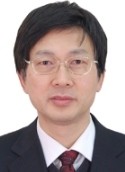 Yu-quan Wei, Ph.D., Professor and Director of National/State Key Laboratory of Biotherapy and Clinical Cancer Center, West China Hospital, West China Medical School, Sichuan University, Chengdu. He was educated at West China University of Medical Sciences for a bachelor's degree in Medicine and a Master's Degree in Medicine, and educated at Kyoto University in Japan for Doctoral Degree. His major research interests include: targeted therapy, signal transduction, gene and cell therapy, and cancer vaccines. He has published more than 300 papers in international journals including Nat Med, Nat Commun, PNAS, Blood, Cancer Res, Clinic Cancer Res, J Immunol, and J Biol Chem, etc. He was selected as an academician of Chinese Academy of Sciences in 2003. He is now President of China Medicinal Biotech Association. He has served as an associate editor of Human Gene Therapy and Editorial Board Member of several International Journals. Yu-quan Wei, Ph.D., Professor and Director of National/State Key Laboratory of Biotherapy and Clinical Cancer Center, West China Hospital, West China Medical School, Sichuan University, Chengdu. He was educated at West China University of Medical Sciences for a bachelor's degree in Medicine and a Master's Degree in Medicine, and educated at Kyoto University in Japan for Doctoral Degree. His major research interests include: targeted therapy, signal transduction, gene and cell therapy, and cancer vaccines. He has published more than 300 papers in international journals including Nat Med, Nat Commun, PNAS, Blood, Cancer Res, Clinic Cancer Res, J Immunol, and J Biol Chem, etc. He was selected as an academician of Chinese Academy of Sciences in 2003. He is now President of China Medicinal Biotech Association. He has served as an associate editor of Human Gene Therapy and Editorial Board Member of several International Journals.
Associate Editors
- Rami I. Aqeilan, Milton Winograd Chair in Cancer Research, Lautenberg Center for Immunology and Cancer Research, Hebrew University of Jerusalem, Israel
- Ashley Bush, University of Melbourne, Australia
- Xuetao Cao, Chinese Academy of Medical Science, China
- Webster K. Cavenee, Ludwig Institute for Cancer Research University of California, San Diego, USA
- Xin-yuan Fu, National University of Singapore, Singapore
- Guangping Gao, Microbiology and Physiological Systems, University of Massachusetts Medical School, Massachusetts, USA
- Curtis Harris, Laboratory of Human Carcinogenesis, National Cancer Institute, National Institutes of Health, USA
- Zhen Huang, Department of Chemistry & Department of Biology, Georgia State University, Atlanta, Georgia, USA
- Yibin Kang, Princeton University, USA
- Weimin Li, West China Hospital, Sichuan University, China
- Yang Liu, Center for Cancer and Immunology Research, Children's National Medical Center, Washington DC, USA
- Qing Richard Lu, Brain Tumor Center, Cincinnati Children's Hospital Medical Center, USA
- Pralay Maiti, Indian Institute of Technology, Banaras Hindu University, India
- Zhiyong Qian, State Key Laboratory of Biotherapy, West China Hospital, Sichuan University, China
- Dalla-Favera Riccardo, Cancer Center, Columbia University; Department of Pathology & Cell Biology, Columbia University, USA
- Hongbing Shu, Wuhan University, China,
- Shao-Cong Sun, University of Texas, MD Anderson Cancer Center, USA
- Philip N Tsichlis, Molecular Oncology Research Institute, Tufts Medical Center, USA
- Peter K. Vogt, The Scripps Research Institute, USA
- Rong Xiang, Nankai University, China
- Zhixiong Xiao, College of Life Sciences, Sichuan University, China
- Shengyong Yang, State Key Laboratory of Biotherapy, West China Hospital, Sichuan University, China
|

