期刊名称:NPJ REGENERATIVE MEDICINE
 期刊简介(About the journal)
投稿须知(Instructions to Authors)
编辑部信息(Editorial Board) 期刊简介(About the journal)
投稿须知(Instructions to Authors)
编辑部信息(Editorial Board)
About the journal
Aims & Scope
npj Regenerative Medicine is an open access, online-only, peer-reviewed journal dedicated to publishing high-quality research on ways to help the human body repair, replace and regenerate damaged tissues and organs. The journal supports insightful mechanistic experiments in other species where the regenerative capacity of tissues, organs and whole body parts vary widely, making comparative studies of particular interest and relevance to mammalian systems.
npj Regenerative Medicine publishes high-quality research into the development of effective therapies for promoting the body's own repair, through discovery of the basic mechanisms behind the regenerative process. The journal encourages studies that integrate basic knowledge on tissue damage and regeneration with the prospect of clinical tissue repair strategies. Important areas of interest include endogenous stem cell function, the role of tissue stroma, secreted factors and other micro-environmental influences in tissue restoration, the interplay of local and systemic immune responses to damage, the development of biologically active molecules or inductive scaffolds and transplantation of in vitro-grown organs and tissues.
Instructions to Authors
This section will help you when preparing your manuscript for initial submission and resubmission to npj Regenerative Medicine. Please ensure that you familiarise yourself with our editorial policies as outlined in our Guide for Authors before submitting your work. An overview of key information on submitting primary research is also available in our brief guide to manuscript submission in PDF format.
For information on our aims and scope, as well as our content types, please refer to the About the journal section.
All manuscripts must be submitted electronically through our online submission system, from which you can upload the cover letter and manuscript files (text, figures and supplementary information, including video) and check on the status of your manuscripts during the review process.
Revised manuscripts should be uploaded through the link provided in the editor's decision letter. Please do not submit revisions as new manuscripts.
The authors must include copies of all related manuscripts with any overlap in authorship that are under consideration or in press elsewhere.
Guide for Authors
View our guide for authors for detailed information on editorial criteria, and how manuscripts are handled by our editors between submission and acceptance for publication.
Manuscripts submitted to npj Regenerative Medicine do not need to adhere to our formatting requirements at the point of initial submission; formatting requirements only apply at the time of acceptance.
 Download Guide for Authors Download Guide for Authors
Editorial Board
Editor-in-Chief
 Professor Nadia Rosenthal, PhD, FMedSci, FAAHMS Professor Nadia Rosenthal, PhD, FMedSci, FAAHMS
Scientific Director, The Jackson Laboratory, USA
Chair, Cardiovascular Science & Scientific Director, Imperial College London
Scientific Head, EMBL, Australia, Australia
Professor Rosenthal is a member of the Australia and New Zealand Society for Cell and Developmental Biology. She has been a faculty member of the Australian Developmental Biology Workshop and is a Visiting Professor at University of Western Australia. She currently holds an NHMRC Australia Fellowship. Professor Rosenthal spearheaded the election of Australia to EMBL as its first Associate Member and serves as Scientific Head of EMBL Australia. She also holds a Chair in Cardiovascular Science at Imperial College London. Professor Rosenthal's research focuses on the developmental genetics of heart and skeletal muscle, the molecular biology of ageing and the role of growth factors, stem cells and the immune system in tissue regeneration.
Deputy Editor
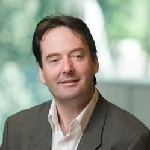 Peter Currie, PhD Peter Currie, PhD
Director, Australian Regenerative Medicine Institute
Monash University
Melbourne, Australia
Professor Currie has worked as an independent laboratory head at the UK Medical Research Council Human Genetics Unit in Edinburgh, UK and the Victor Chang Cardiac Research Institute in Sydney, Australia, where he headed a research programme focused on skeletal muscle development and regeneration. In 2016 he was appointed Director of the Australian Regenerative Medicine Institute at Monash University in Melbourne, Australia. His work is centred on understanding how the small freshwater zebrafish is able to build and regenerate both skeletal and cardiac muscle.
Associate Editors
 Stephen Badylak, DVM, PhD, MD Stephen Badylak, DVM, PhD, MD
Deputy Director, McGowan Institute for Regenerative Medicine
The University of Pittsburgh
PA, USA
Dr. Badylak has served as the Chair of several study sections at the National Institutes of Health (NIH) and is currently a member of the College of Scientific Reviewers for NIH. Dr. Badylak is a Fellow of the American Institute for Medical and Biological Engineering, a member of the Society for Biomaterials, a charter member of the Tissue Engineering Society International, a past president of the Tissue Engineering Regenerative Medicine International Society (TERMIS) and a Founding International Fellow of TERMIS.
 Helen Blau, PhD Helen Blau, PhD
Baxter Laboratory for Stem Cell Biology
Stanford University School of Medicine
CA, USA
Professor Blau is world-renowned for her work on nuclear reprogramming and demonstration of the plasticity of cell fate using cell fusion, which provided the scientific underpinnings for induced pluripotent stem cells. Additionally, her lab has revealed a novel role for premature telomere shortening in cardiac failure due to genetic defects, which is recapitulated in cardiomyocytes derived from patient induced pluripotent cells (iPSC). Her lab's pioneering research has identified regulators that rejuvenate the function of aged muscle stem cells leading to increased strength.
 Stuart Forbes, FRSE, FMediSci Stuart Forbes, FRSE, FMediSci
Group Leader, Medical Research Council Centre for Regenerative Medicine
University of Edinburgh
Edinburgh, UK
Stuart Forbes is Professor of Transplantation and Regenerative Medicine at the University of Edinburgh, Director of the MRC Centre for Regenerative Medicine, and Director of the UK wide UKRMP Hub for engineering and exploiting the stem cell niche. His research focuses on how the chronically damaged liver regenerates and how this mechanisms process becomes deranged in liver and bile duct cancer. In particular, Forbes's research looks at how the epithelial cells in the liver (hepatocytes and biliary cells) interact with the inflammatory cells of the liver during injury and regeneration.
 Eric Olson, PhD Eric Olson, PhD
Director, Hamon Center for Regenerative Science and Medicine
University of Texas Southwestern Medical Center
TX, USA
Eric Olson founded the Department of Molecular Biology at UT Southwestern Medical Center, where he is currently Professor and Chair. He holds the Robert A. Welch Distinguished Chair, the Pogue Chair in Cardiac Birth Defects and the Annie and Willie Nelson Professorship in Stem Cell Research. He also directs the Hamon Center for Regenerative Science and Medicine and the Wellstone Center for Muscular Dystrophy Research. His team discovered many of the genes that control heart and muscle development and disease. Olson's most recent work has revealed a promising strategy for correction of Duchenne muscular dystrophy using CRISPR gene editing.
 Thomas Rando, MD, PhD Thomas Rando, MD, PhD
Director, The Glenn Laboratories for the Biology of Aging
Stanford University School of Medicine
CA, USA
Dr. Rando's research focuses on stem cell biology, with particular interest in stem cell aging and tissue engineering. He has pioneered the field of systemic factors as regulators of cellular aging based upon seminal studies done in his laboratory using the technique of heterochronic parabiosis. Work in Dr. Rando's laboratory has also provided the foundation for studies of the epigenetics of stem cell function and stem cell aging, leading to the concept of "epigenetic rejuvenation" by which interventions (e.g., dietary, pharmacologic, parabiotic) may slow or even reverse the aging process.
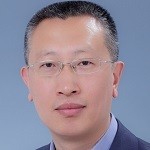 Qi Zhou, PhD Qi Zhou, PhD
State Key Laboratory of Stem Cell and Reproductive Biology
Institute of Zoology, Chinese Academy of Sciences
Beijing, People's Republic of China
Prof. Zhou's research interests cover stem cell, reproductive and developmental biology, and he is also dedicated to promoting the application of stem cells to clinical use. His main scientific achievements include: produced world-first cloned rat; obtained the first healthy animal derived from induced pluripotent stem cells; established mammalian haploid embryonic stem (ES) cells of model species; generated world-first mammalian diploid hybrid ES cells of phylogenetically distal species and established Beijing Stem Cell Bank and the clinical-grade stem cell lines to promote the clinical application of stem cells.
Editorial Board Members
Nick Barker, PhD A*Star, Singapore
Shoumo Bhattacharya, MD University of Oxford, Oxford, UK
Cedric Blanpain, MD, PhD Université Libre de Bruxelles, Brussels, Belgium
Andrew Brack, PhD University of California, San Francisco, California, USA
Nenad Bursac, PhD Duke University, North Carolina, USA
Lesley Chow, PhD Lehigh University, Pennsylvania, USA
Gerald de Haan, PhD University of Groningen, Groningen, Netherlands
Magdalena Götz, PhD Helmholz Center Munich, Munich, Germany
Richard Harvey, PhD The Victor Chang Cardiac Research Institute, Sydney, Australia
Karen Hirschi, PhD Yale Cardiovascular Research Center, Conneticut, USA
Salman Khetani, PhD University of Illinois at Chicago, Illinois, USA
Michael Lotze, MD University of Pittsburgh, Pennsylvania, USA
Paul Martin, BSc, PhD University of Bristol, Bristol, UK
Alexandra Naba, PhD University of Illinois at Chicago, Illinois, USA
Andras Nagy, PhD Mount Sinai Hospital, Toronto, Canada
Laura Niklason, PhD, MD Yale University, Conneticut, USA
Martin Pera, PhD The Jackson Laboratory, Maine, USA
Enzo Porrello, PhD Murdoch Children's Research Institute, Melbourne, Australia
Ken Poss, PhD Duke University, North Carolina, USA
Olivier Pourquie, PhD Harvard University, Massachusetts, USA
Fred Relaix, PhD Pitié-Salpêtrière Hospital, Paris, France
Michael Rudnicki, OC, PhD, FRSC Ottawa Health Research Institute, Ottawa, Canada
Susanne Sattler, PhD Imperial College London, London, UK
Michael Schneider, MD Imperial College London, London, UK
Michal Schwartz, PhD Weizmann Institute of Science, Rehovot, Israel
Samuel Stupp, PhD Northwestern University, Illinois, USA
Shahragim Tajbakhsh, PhD Pasteur Institute, Paris, France
Nature Research
Managing Editor: Wanda Layman, PhD
Editorial Director, Life Sciences, Community Journals, NPJs: Arianne Heinrichs, PhD
Peer Review Assistants: Priyanka De, Ayesha Pathan
Editorial Assistants: Rosie Tobutt and Caterina Timu
Senior Editorial Assistant: Molly Jiang
Editorial Assistant Supervisor: Yasmin Esmaeili
Editorial Administration Manager: Colm Pollard
Publisher/Head of Outreach and Partnerships EMEA: Warren Raye, PhD
Director, Strategic Partnerships Americas & Global NPJs: Andrea Macaluso
Assistant Production Editor: Annabelle Topliss
Production Editors: David Pentney and Annika Jesse
Senior Production Editor: Jessica Hart
Managing Production Editor: Kate Neil
Operations and Partnerships Manager: Esther Trinh
Senior Marketing Manager: Heather Dunphy
Head of Researcher Experience: Katherine Arundell
VP Editorial, Nature Research and Community Journals: Meredith LeMasurier, PhD
VP Commercial, Nature Research Group: Andrew Douglas
Chief Editorial Advisor, Nature Research: Magdalena Skipper, PhD
|

