A multidisciplinary journal focussing on all fundamental science and technological aspects of catalysis
Impact Factor3.75312 Issues per Year
Scope
Catalysis Science & Technology is a new multidisciplinary journal focussing on both the fundamental science of catalysis and the science of catalysis technology, including applications addressing societal demands such as CO2 reduction, conversion of renewables and fuels. The journal contains a balanced mix of applied, fundamental, experimental and computational research, thus appealing to both academic and industrial scientists.
Catalysis Science & Technology brings together the best quality research from the heterogeneous, homogeneous, organocatalysis and bio-catalysis communities.
Article Types
Catalysis Science & Technology publishes a full mix of primary articles, communications and reviews.
Readership
Academic and industrial chemists of all disciplines using heterogeneous and homogeneous catalysis: organic, organometallic, inorganic and bio(in)organic chemists; biochemists; physical and theoretical chemists; materials, polymer, surface, and environmental scientists.
Catalysis Science & Technology Royal Society of Chemistry, Thomas Graham House, Science Park, Milton Road, Cambridge CB4 0WF Tel: +44 (0) 1223 432139 Fax: +44 (0) 1223 420247 Email: Catalysis Science & Technology
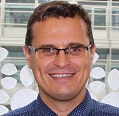
Piet van Leeuwen has been Group Leader at the ICIQ in Tarragona, Spain, since 2004. He has chaired and directed many activities in the field of catalysis in the Netherlands, especially keen on integrating activities in the catalysis area. He worked with Shell Amsterdam for twenty six years heading the section for basic research in homogeneous catalysis. Since 1989, part-time, and since 1994 full time, he initiated and led the homogeneous catalysis group at the University of Amsterdam as a Professor of Homogeneous Catalysis until 2007. He held a chair of Industrial Homogeneous Catalysis at the Technical University of Eindhoven from 2001 till 2006, where he was also director of the National Research School Combination on Catalysis. He has authored 350 refereed articles and reviews, many book chapters, edited several books, and is author of a textbook on homogeneous catalysis.
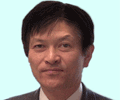
Noritaka Mizuno received his Bachelor's degree in synthetic chemistry at the University of Tokyo in 1980. He received his PhD from the same university in 1985 for his research on the heterogeneous oxidation catalysis of heteropoly compounds. In 1989 he moved to the Professor Richard G. Finke lab at the University of Oregon as a postdoc and then in 1990, returned to Japan as an Associate Professor at Catalysis Research Center, Hokkaido University. In 1994, he moved to the Institute of Industrial Science, the University of Tokyo, and then to the Department of Applied Chemistry of the same university, where he has been a full Professor since 2001. His research interests are mainly directed toward catalysis of metal oxide clusters such as heteropoly compounds and zeolitic materials and their syntheses.
Associate Editor
Professor Paul Chirik
Associate Editor, Catalysis Science & Technology
Paul Chirik is currently the Edward S. Sanford Professor of Chemistry at Princeton University, NJ, USA. Before this Paul was based at Cornell University, NY, USA from 2001-2011. His work is focussed on homogeneous catalysis and small molecule activation using transition metal complexes. The goal of this research is the discovery of energy-efficient chemical transformations that minimize byproducts, separation of waste and eliminate precious metals.
Associate Editor
Professor Paul Kamer
Associate Editor, Catalysis Science & Technology
Paul Kamer obtained a degree in biochemistry at the University of Amsterdam and did his PhD in physical organic chemistry at the University of Utrecht. As a postdoctoral fellow of the Dutch Cancer Society (KWF) he carried out postdoctoral research at the California Institute of Technology and the University of Leiden. He was appointed Lecturer at the University of Amsterdam and full Professor of homogeneous catalysis in 2005. In 2005 he received a Marie Curie Excellence Grant and moved to the University of St Andrews. His current research interests are (asymmetric) homogeneous catalysis, biocatalysis, combinatorial synthesis, and artificial metalloenzymes.
Associate Editor
Professor Javier Perez-Ramirez
Associate Editor, Catalysis Science & Technology
Javier Pérez-Ramírez has been the Chair of Catalysis Engineering at the Institute for Chemical and Bioengineering, ETH Zurich since January 2010. Born and raised in Benidorm, Spain, Javier studied chemical engineering at the University of Alicante and later earned his PhD degree at the Delft University of Technology, The Netherlands in 2002. After spending some time in industry (2002-2005), holding several positions at Norsk Hydro and Yara International in Porsgrunn (Norway) where he was responsible of core projects related to catalyst development within fertilizer production, he was appointed ICREA research professor at ICIQ in Tarragona, Spain where he remained until his move to Zurich in 2010. The goal of this research is the discovery of energy-efficient chemical transformations that minimize byproducts, separation of waste and eliminate precious metals.
Associate Editor
Professor Tsunehiro Tanaka
Associate Editor, Catalysis Science & Technology
Tsunehiro Tanaka graduated from Kyoto University's Department of Hydrocarbon Chemistry in 1982 and received his PhD at Kyoto University in 1987 for studying the mechanism of photocatalysis by supported metal oxides and characterization by XAFS spectroscopy. He began his career as an Assistant Professor at Hokkaido University in 1987, carrying out fundamental research on acid-base catalysis and then moved to the Department of Molecular Engineering, Kyoto University in 1990 and was promoted to be a Full Professor in 2004. Professor Tanaka has been Director of the Elements Strategy Initiative for Catalysts & Batteries (ESICB), Kyoto University supported by MEXT since 2012. His research interest is focused on the elucidation of heterogeneous catalytic mechanisms at a molecular level, in particular, catalysis by metallic nanoparticles or metal oxides on supports.
Managing Editor
Dr Jamie Humphrey
Managing Editor, Catalysis Science & Technology
Dr Jamie Humphrey is the Editor of Catalysis Science & Technology. He was born in the UK, in the historical city St. Albans. He studied chemistry at Cambridge University, and then studied for his PhD in Inorganic Chemistry also at Cambridge University. He has worked as an Editor at the RSC since 1995. In addition to being Editor for Catalysis Science & Technology (since 2010), Jamie is also Editor for Dalton Transactions (since 2003), CrystEngComm (since 1999) and New Journal of Chemistry, NJC (since 2011). His hobbies include gardening, genealogy and learning about different cultures.