期刊名称:AUSTRALIAN VETERINARY JOURNAL
 期刊简介(About the journal)
投稿须知(Instructions to Authors)
编辑部信息(Editorial Board) 期刊简介(About the journal)
投稿须知(Instructions to Authors)
编辑部信息(Editorial Board)
About the journal
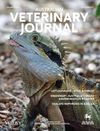
Print ISSN: 0005-0423 Online ISSN: 1751-0813
Australian Veterinary Journal
© Australian Veterinary Association
Edited By: Anne Jackson
Impact Factor: 0.918
ISI Journal Citation Reports © Ranking: 2012: 69/143 (Veterinary Sciences)
Overview
The Australian Veterinary Journal is Australia's leading scientific publication in the field and provides an essential forum for the dissemination of leading edge veterinary research.
-
ISI and MEDLINE listed
-
Online submissions at Manuscript Central
-
Publishing case reports, reviews, opinions, news, book reviews, letters to the Editor and more.
Aims and Scope
Over the past 80 years, the Australian Veterinary Journal (AVJ) has been providing the veterinary profession with leading edge clinical and scientific research, case reports, reviews. news and timely coverage of industry issues. AJV is Australia's premier veterinary science text and is distributed monthly to over 5,500 Australian Veterinary Association members and subscribers.
Readership
The AVJ offers advertisers a captive niche market of veterinary surgeons and other key veterinary practice staff who manage veterinary practices.
5,500 copies nationally to AVA member practices, universities, researchers, veterinary industry bodies and authorities and international subscribers.
Keywords
Australian Veterinary Journal, AVJ, veterinary, medicine, animals
Abstracting and Indexing Information
- Abstracts on Hygiene & Communicable Diseases (CABI)
- AgBiotech News & Information (CABI)
- AgBiotechNet (CABI)
- AGRICOLA Database (National Agricultural Library)
- Agricultural Engineering Abstracts (CABI)
- Agroforestry Abstracts (CABI)
- Animal Breeding Abstracts (CABI)
- Biocontrol News & Information (CABI)
- Biological Abstracts (Thomson Reuters)
- BIOSIS Previews (Thomson Reuters)
- CAB Abstracts® (CABI)
- CABDirect (CABI)
- CAS: Chemical Abstracts Service (ACS)
- CSA Biological Sciences Database (ProQuest)
- Current Contents: Agriculture, Biology & Environmental Sciences (Thomson Reuters)
- Dairy Science Abstracts (CABI)
- Field Crop Abstracts (CABI)
- GeoRef (AGI)
- Global Health (CABI)
- Grasslands & Forage Abstracts (CABI)
- Helminthological Abstracts (CABI)
- Horticultural Science Abstracts (CABI)
- Immunology Abstracts (ProQuest)
- Index Medicus/MEDLINE (NLM)
- Index Veterinarius (CABI)
- Journal Citation Reports/Science Edition (Thomson Reuters)
- MEDLINE/PubMed (NLM)
- Neurosciences Abstracts (ProQuest)
- Nutrition Abstracts & Reviews Series B: Livestock Feeds & Feeding (CABI)
- Pig News & Information (CABI)
- Poultry Abstracts (CABI)
- Protozoological Abstracts (CABI)
- PubMed Dietary Supplement Subset (NLM)
- Review of Agricultural Entomology (CABI)
- Review of Aromatic & Medicinal Plants (CABI)
- Review of Medical & Veterinary Entomology (CABI)
- Review of Medical & Veterinary Mycology (CABI)
- Review of Plant Pathology (CABI)
- Science Citation Index (Thomson Reuters)
- Science Citation Index Expanded (Thomson Reuters)
- SCOPUS (Elsevier)
- Soils & Fertilizer Abstracts (CABI)
- Tropical Diseases Bulletin (CABI)
- Veterinary Bulletin (CABI)
- Weed Abstracts (CABI)
- World Agricultural Economics & Rural Sociology Abstracts (CABI)
- Zoological Record (Thomson Reuters)
Society Information
The Australian Veterinary Association (AVA) is the professional organisation representing veterinarians across Australia.
The Australian Veterinary Association aims to advance veterinary science by:
- Promoting continuing education for members via the AVA Conference and other high quality events and opportunities, and increasing utilisation of AVA VetEd
- Acting and speaking with one voice to ensure that AVA member-generated policy informs decision-makers and makes veterinary science visible in Australian community debates
- Demonstrating that all AVA members adhere to the AVA Professional Code of Conduct, and
- Providing excellent service to members, while continually striving to achieve high standards of management and governance.
Visit the Society's website at www.ava.com.au
Instructions to Authors
Author Guidelines
Aims and scope of the journal
The Australian Veterinary Journal (AVJ) is the official journal of the Australian Veterinary Association. The AVJ aims to advance veterinary science by publishing and promoting high-quality, refereed scientific and clinical articles.
The AVJ welcomes original contributions, including articles, short contributions, reviews, case series, clinical updates and letters on all aspects of veterinary science.
The acceptance criteria for all papers are the quality and originality of the research and its significance to Australasian veterinary medicine.
Editorial review and acceptance
All articles are peer reviewed.1
The AVJ peer review process operates under the guidelines of the World Association of Medical Editors (http://www.WAME.org) and the International Association of Veterinary Editors (http://www.veteditors.org).
We encourage the use of the REFLECT Statement, to help authors improve the reporting of livestock trials with production, health and food-safety outcomes,2 and the CONSORT guidelines for reporting of randomised controlled trials.3
After review, recommendations on outcome are made by the Editorial Committee and the Associate Editors. Final decisions are made by the Editor in Chief, Dr Anne Jackson, MA, VetMB, PhD, MRCVS, CMAVA.
All manuscripts are edited to eliminate ambiguity and repetition, to improve communication between author and reader, and for length. If extensive alterations are required, the manuscript will be returned to the author for revision.
Ethical considerations
Submission to the AVJ confirms that the protocol for the research project has been approved by a properly constituted ethics committee of the institution within which the work was undertaken and that, if applicable, it conforms to the provisions of the Declaration of Helsinki (as revised in Edinburgh 2000).4 The AVJ retains the right to reject any manuscript on the basis of unethical conduct of either human or animal studies.
The handling and use of animals in experiments must conform to the Australian code of practice for the care and use of animals for scientific purposes.5 In cases likely to raise controversy, an appropriate reference in the article to approval by an animal experimentation ethics committee is recommended.
Instructions for specific manuscript types
Original article
• Maximum 6500 words, including up to 40 references
• Structured abstract of up to 250 words, with headings such as Objective, Design, Procedure, Results and Conclusion
• Up to six key words
• Introduction – state the purpose of the study
• Materials and methods – describe in sufficient detail to enable others to reproduce the work
• Results – present the findings concisely and logically, referring to accompanying figures and tables where necessary
• Discussion – evaluate and interpret the findings, without presenting new data, and with the main conclusions at the end
• Acknowledgments – including any sources of funding
• References
Headings may vary from standard if the variation makes the article more informative.
Review
• Maximum 6500 words, including up to 50 references
• Structured abstract of up to 250 words
• Up to six key words
• Introduction
• Critical review of the published literature in the area, examining the validity of conclusions, conflicting observations and interpretations, and not simply a summary of published papers
• Conclusions
Short contribution
• Maximum 1500 words and 15 references
• Unstructured abstract of up to 100 words
• Up to six key words.
Novel observations and interpretations that have not arisen within rigorous experimental constraints and may not therefore warrant a full article, or observations that are of wide interest, but of a minor nature, may be suited to this format.
Clinical review and case report/case series
Clinical reviews with either a single case report or a series of cases. These should concern a rare or new condition. Case reports that do not add substantially to the existing literature will not be published. The first published example in Australia (or any other country) of a condition that is well recognised elsewhere is not necessarily of sufficient interest to warrant publication in the AVJ.
• Maximum 3500 words and up to 30 references (case series should not exceed 6500 words).
• Structured summary of up to 200 words with author-defined headings
• Up to six key words
• Introduction – indicating the importance of the case/s and why it is novel and worth reporting
• Case report/series – history and description of the animals, clinical features, diagnosis, interventions and procedures, and outcome. Descriptions should be brief and clear. The clinical features should be only those needed to convince readers that the case is what it is claimed to be and that other plausible diagnoses have been excluded. Reference ranges of values for any laboratory tests conducted must be included
• Discussion – authors should:
o discuss the case in the light of relevant published work
o discuss the evidence that the case is what they believe it to be
o discuss how their observations and the results of tests support their diagnosis, treatment and recommendations
o consider and refute other plausible explanations
o explain any other contradictory observations or evidence
o discuss the implications and relevance of the case
o identify lessons learnt from the case for investigation or management of similar cases
• Acknowledgments
• References
A submission by a student who is the sole author of a case report should be accompanied by a letter from the Head of Department or Dean, who verifies that the report has been generated by the student’s endeavours.
History
Articles should be relevant to the history of veterinary medicine in Australasia.
• Maximum 5000 words, including up to 40 references
• Abstract of up to 250 words
• Up to six key words
Diagnostic challenge
These challenges may encompass practical diagnostic pathology, epidemiology, imaging or other clinical challenges. Their main aim is to highlight the usefulness of investigative techniques in formulating a diagnosis, while providing a realistic challenge to the reader.
• Section 1. Maximum 600-800 words depending on the number of images.
o Clinical history - highlighting the presenting signs, signalment (age, sex, breed) and any ancillary tests performed (e.g. clinical pathology, radiographic imaging)
o Gross pathology (with image) - this section can be flexible, depending upon which is the most appropriate diagnostic modality to best capture the underlying pathology.
At the end of the first page, readers will be invited to formulate a diagnosis (or differential diagnoses) based on the given findings, then refer to subsequent pages for more details.
• Section 2. Maximum 1800 words.
o Histopathology with image (or appropriate data for clinical pathology papers)
o Diagnosis
o Discussion - an in-depth, mini-review of the current state of knowledge of the disorder being presented or pathological process involved in its genesis
o References
Submissions should state their focus areas, such as Practical diagnostic pathology, Diagnostic imaging, Epidemiology etc.
Requirements for submission
Manuscripts should be submitted online at http://mc.manuscriptcentral.com/avj.
All articles submitted to the AVJ must comply with these instructions.
Submit your manuscript and all tables as a word processor file, with separate files for each figure.
Author declarations
By ticking the boxes on the Details and Comments page of the submission website, authors must:
• confirm that the manuscript has been submitted solely to the AVJ and is not published, in press or submitted elsewhere
• declare that all the research meets the ethical guidelines of the study country
• declare any real or potential conflict of interest, including the source of any financial grants or other funding
• confirm that the contribution of all authors is stated and all authors are in agreement with the content of the manuscript.
The covering letter should contain:
• information on prior or duplicate publication or submission elsewhere of any part of the paper
• a statement confirming that any handling and/or use of animals in experiments conforms to the Australian code of practice for the care and use of animals for scientific purposes5
• a statement confirming that the research adhered to the ethical requirements of the study country, if the research was not conducted in Australia
• any additional information that may be helpful to the Editors.
Authorship
Eligibility for authorship should be based only on a substantial contribution to (a) conception and design, or analysis and interpretation of data, and (b) drafting the article or revising it critically for important intellectual content. Conditions (a) and (b) must both be met. For example, for a pathologist to be included as author of an article, he or she should have contributed to conception of the study and/or interpretation of pathological data, drafted relevant sections of the article and engaged in critical review and revision of the whole article.
Each author must have participated sufficiently in the work to take public responsibility for their contribution. General supervision of the research group, or participation in the acquisition of funding or the collection of data do not in themselves justify authorship.
Copyright, Licensing and Online Open
If tables or figures have been reproduced from another source, a letter from the copyright holder, stating authorisation to reproduce the material, must be attached.
Accepted papers will be passed to Wiley's production team for publication. The author identified as the formal corresponding author for the paper will receive an email prompting them to login into Author Services; where via the Wiley Author Licensing Service (WALS) they will be able to complete the license agreement on behalf of all authors on the paper.
FAQs about the terms and conditions of the standard copyright transfer agreements (CTA) in place for the journal, including terms regarding archiving of the accepted version of the paper, are available at: CTA Terms and Conditions FAQs.
OnlineOpen - 'Gold road' Open Access
OnlineOpen is available to authors of articles who wish to make their article freely available to all on Wiley Online Library under a Creative Commons license. In addition, authors OnlineOpen articles are permitted to post the final, published PDF of their article ona website, institutional repository or other free public server, immediately on publication. With OnlineOpen the author, the author's funding agency, or the author's institution pays a fee to ensure that the article is made open access, known as 'gold road' open access.
OnlineOpen licenses. Authors choosing OnlineOpen retain copyright in their article and have a choice of publishing under the following Creative Commons License terms: Creative Commons Attribution License (CC BY); Creative Commons Attribution Non-Commercial License (CC BY NC); Creative Commons Attribution Non-Commercial-NoDerivs License (CC BY NC ND)
For more information about the OnlineOpen license terms and conditions click here.
Note to contributors on Deposit of Accepted Version
Funder arrangements
Certain funders, including NIH, members of the Research Councils UK (RCUK) and Wellcome Trust require deposit of the Accepted Version in a repository after an embargo period. Details of funder arrangements are set out at the following website: http://www.wiley.com/go/funderstatement. Please contact the Journal production editor if you have additional funding requirements.
Institutions
Wiley has arrangements with certain academic institutions to permit the deposit of the Accepted Version in the institutional repository after an embargo period. Details of such arrangements are set out at the following website: http://www.wiley.com/go/funderstatement.
Author material archive policy
Authors who require the return of any submitted material should inform the Editorial Office. Otherwise, all electronic material submitted by authors will be deleted 6 months after a final decision on publication is made.
Manuscript style and format
Manuscripts should be written in a clear, concise, direct style, so that they are intelligible to the professional reader who is not a specialist in the particular field. English should be without jargon or colloquialisms.
The AVJ uses the Style manual for authors, editors and printers,6 Scientific style and format: The CBE manual for authors, editors, and publishers7 and recommends Strunk’s classic book8 for clarity of expression.
It is recommended that the manuscript is critically read by a colleague experienced in scientific authorship, but who is not directly involved in the study, before submitting it to the AVJ.
The responsibility for making sure that manuscripts are submitted in the correct format and with a suitable standard of English rests with the authors. Papers will be returned without review if the English is not of a sufficient standard. Authors for whom English is a second language may choose to have their manuscript professionally edited before submission or during the review process. Further details can be found at: http://authorservices.wiley.com/bauthor/english_language.asp, or by contacting Assistant Editor Kerry Brown at the AVJ Editorial Office.
Spelling
The AVJ uses Australian English spelling and authors should consult the latest edition of The Australian Oxford dictionary9 or The Macquarie dictionary.10
Units
Use SI basic or derived units or declared units of the Australian metric system (e.g. ha, min, °C) where applicable. Write dates in the form '10 April 2002' and currency in the form ‘A$33’. Spell out single digit numbers that express a quantity (three sheep, five paddocks), but not if used with an SI or similar unit or its symbol (5 mL, 9 m, 7 weeks, 6°C) or as an identifier (group 4, farms 7 and 9). If you start a sentence with a number, spell it out. Type a space between a number and its unit symbol, except for °C and %. Use a comma as a thousands marker in numbers of more than four digits (e.g. 21,000).
Title
The title should be concise, specific and informative, but should not make an assertive claim about the conclusions of the study. Avoid including geographical locations unless they are of epidemiological significance. Only the first letter of the title is capitalised.
Authors' names and addresses
List the authors using initials then family name (e.g. KM Smith).
Separate the authors’ names with a comma, except the names of the last two authors, which are separated with ‘and’ (e.g. KM Smitha* and KJ Smytheb).
Include the addresses of the institutions at which the work was carried out and indicate the authors’ affiliations using superscript letters (a, b, c etc.).
The submitting author, indicated with an asterisk, is the author for all correspondence. Include the submitting author’s email address, and the present address, if different from that where the work was carried out.
Headings
Do not indent headings or end headings with full-stops. Only the first letter is capitalised. Abstract subheadings are typed in bold, separated by a tab space from the following text on the same line. Major text headings are typed in bold on a separate line. First-order subheadings are typed on a separate line and italicised in bold. Second-order subheadings are italicised and followed by a tab to separate them from the text, which follows on the same line. Do not number subheadings, paragraphs or itemised lists in the text.
Key words
Key words are used by indexes and electronic search engines, and should appear after the abstract. Use the heading ‘Keywords’ and then list the key words separated by semi-colons. Also enter the key words where prompted during the submission process.
Abbreviations
Compose the abbreviation list in alphabetical order. Use the heading ‘Abbreviations’ and then list the abbreviations and their definitions, separated by semi-colons.
Abbreviations should be used only where they ease the reader’s task by reducing repetition of long, technical terms. Use abbreviations only if the term is used three or more times. All abbreviations are to be listed in the abbreviations list and written out in full the first time they appear in the text, followed by the abbreviation in brackets. Exceptions are SI units and commonly used terms that can be understood from the context, for example:
IV, SC, IM, DNA, RNA, EDTA, IgA, IgG
These need not be written out in full or included in the abbreviations list.
Trade names
Mention the manufacturer and the essential information on drugs, reagents and equipment in parentheses within the text. Details on commonly used and well-known materials may not be necessary unless likely to influence the results.
Acknowledgments
Sources of funding should be acknowledged.
Authors should acknowledge only significant intellectual and technical contributions, and permission from those listed should be obtained before publication.
References
Number text references consecutively with superscript Arabic numerals that follow any punctuation marks, with no spaces between consecutive references. Construct the reference list in the same numerical sequence of the references in the text. References cited only in tables or in figure legends are numbered according to the first identification of the table or figure in the text. References to journals, books, conference proceedings, organisational papers, anonymous editorials, foreign language articles and internet websites, respectively, are written as follows:
• Journals:Gibson KT, Hodge H, Whittem T. Inflammatory mediators in equine synovial fluid. Aust Vet J 1996;73:148–151.
• Books: Sherding RG, editor. The cat: diseases and management. 2nd edn. Churchill Livingstone, New York, 1994.
• Chapter in a book: Peterson ME, Randolph JF, Mooney CT. Endocrine diseases. In: Sherding RG, editor. The cat: diseases and management. 2nd edn. Churchill Livingstone, New York, 1994:1403–1506.
• Conference proceedings (unpublished): Rhodes AP. Infectious bovine keratoconjunctivitis vaccination. In: Proceedings of the 23rd Seminar, Sheep and Beef Cattle Society, Dunedin, NZ, 21-25 June 1993: 25-29.
• Conference proceedings (published): Rhodes AP. Infectious bovine keratoconjunctivitis vaccination. In: Proceedings of the 23rd Seminar, Sheep and Beef Cattle Society, New Zealand Veterinary Association, Wellington, 1993: 25029.
• Organisational papers: Australian Veterinary Association. Tethering of sows and sow stalls. In: Greenwood PE, editor. Members' directory and policy compendium. AVA, Sydney, 1997:B5.
• Anonymous editorials: Where do we stand on manpower? [editorial] Vet Rec 1995;137:1
• Foreign language articles: Homberger FR. Mäusehepatitis-Virus. Schweiz Arch Tierheilkd 1996;138:183–188.
• Internet websites: Council of Docked Breeds. The case for docking. http://www.cdb.org. 1992. Accessed October 2011.
List all authors if there are five or fewer. If there are more than five authors, list only the first three and add 'et al'. Write titles of books, journals and other publications in italics. Do not underline or use bold letters.
The abbreviation of journals follows that of Serial sources for the BIOSIS previews database. A list of journal abbreviations can be found at http://library.caltech.edu/reference/abbreviations/. Journal abbreviations do not contain full-stops. Cite references to unpublished work only in the text, with a notation of (personal communication) or (unpublished). It is the authors' responsibility to check the accuracy of reference citations.
Tables
Tables should be self-contained and complement, but not duplicate, information contained in the text. Format tables with the table function in a word processor program, such as MS Word, with the legend typed above the relevant table. Column headings should be brief, with units of measurement in parentheses. All abbreviations must be defined in footnotes to the table. Use superscript lower case letters to mark footnotes (a, b, c etc.) and superscript capital letters to mark statistical significance (A, B, C etc.)
Number tables consecutively in the order they occur in the text, with Arabic numerals.
Figures
Include figures only if they are informative and necessary for the understanding of the text. Figures must be uploaded as separate files and not be embedded in the main text file. Each figure must be uploaded separately from other figures.
Line figures and graphs should be supplied in their original format, preferably as .xls or .eps files. Images that contain text that are not in .xls or .eps format (e.g. .jpg or .tiff files) must be at least 600 dpi, and at least 8.6cm in image width at that resolution. It is not possible to print images that of insufficient resolution.
Photographs should be in sharp focus and cropped appropriately. They should be of sufficient clarity to enable identification of relevant features. Submit photographs as .tif or .jpg files with a resolution of at least 300 dpi, and at least 8.6 cm in image width at that resolution. It is not possible to print images that are of insufficient resolution.
Scale bars must be included on micrographs. See http://authorservices.wiley.com/bauthor/illustration.asp for more details.
Any lettering should be sans-serif, and must be large enough to allow for a reduction in size. Use a consistent style of layout, lettering, symbols and thickness of lines.
Digital manipulation of an image is acceptable only if it is done to enhance photographic density or to eliminate artefacts. Any digital manipulation must be mentioned in the figure legend. The author(s) must also state in the covering letter that the scientific content of the image has not been altered. The Editor may need to examine the original image.
Number figures consecutively in the order they occur in the text, with Arabic numerals.
Figure and table legends
Legends should be concise, but comprehensive. The figure or table and its legend must be understandable without reference to the text. Include definitions of any symbols used and define/explain all abbreviations and units of measurement.
Early View
The journal offers rapid speed to publication using Wiley Blackwell's Early View service. Early View articles are complete full-text articles published online in advance of their publication in a printed issue. Articles are therefore available as soon as they are ready, rather than having to wait for the next scheduled print issue. Early View articles are complete and final. They have been fully reviewed, revised and edited for publication and the authors' final corrections have been incorporated. Because they are in final form, no changes can be made after online publication. The nature of Early View articles means that they do not yet have volume, issue or page numbers, so Early View articles cannot be cited in the traditional way. They are therefore given a Digital Object Identifier (DOI), which allows the article to be cited and tracked before it is allocated to an issue. After print publication, the DOI remains valid and can continue to be used to cite and access the article. More information about DOIs can be found at http://www.doi.org/faq.html.
Statistical guidelines for authors
Design
Consultation with a biometrician is recommended before the experiment, since decisions made at the design stage are critical for a successful outcome. We recommend Statistics for Veterinary and Animal Science by A Petrie and Paul Watson13 as a good, straightforward text book.
Experiments should be designed to test specific hypotheses. The design constitutes the best way to set up and perform the experiment in order to test the hypotheses.
The number of subjects: The experiment should be neither too small nor too large. Where feasible a pre-study power calculation should be carried out to estimate the numbers required.
Method of analysis: The method of analysis should be clearly specified. Although in most cases standard methods of analysis will be sufficient, complex analyses are readily available in computer packages. Experimenters should be satisfied tha tthe output of a package is both appropriate and intelligible.
Randomisation: An appropriate method should be used to allocate subjects to treatments, and should be briefly mentioned in the text. If some other variable, such as body weight, is taken into account in the allocation, it should be included in the analysis as a covariate or blocking factor.
Surveys should be designed so that the parameters to be estimated, for example, the prevalence of a particular disorder, can be estimated with appropriate precision. Possible sources of bias, as for example introduced by structuring or incomplete returning of a questionnaire, should be discussed.
Analysis
Errors in calculation: Rigorous checking should be used to avoid computational errors, including those of data entry and selection of options when using a package. Because statistics is common sense in a mathematical form, any seeming discrepancy between P values and intuition should be viewed with suspicion.
Appropriate analysis: The analysis used should be appropriate to the design. Take account of blocking if this has been used in allocation, and of trend if an explanatory variable (e.g. dose at different levels) is included.
Appropriate test: Statistical tests used should be appropriate. Remember that there are restrictions on the use of the commoner tests - for example, the t test and analysis of variance require that the data are reasonably consistent with a normal distribution and that the variances to be pooled are compatible. If such assumptions are untenable, the variable can be transformed or non-parametric techniques can be applied. The χ2 is not recommended if expected values are small, in which case an alternative test should be adopted.
Direction of testing and level of significance: Use two-sided testing unless a very clear case is made for one-sided. The most commonly used level of significance (alpha) is 0.05. This may be varied depending on the relative weights to be given to type I and type II errors, but the case should be argued by the authors, especially for alpha = 0.1,
Multiple testing: Tests should be made on comparisons appropriate to the aims of the experiment, not just suggested by the data. If multiple applications of significance testing are necessary, significance levels should be protected using methods such as described by Ludbrook.14
Repeated measures: Where observations on the same subjects are repeated over time, it is important to recognise that the observations are correlated. Apply corrections, such as described by Ludbrook, 15 select a single end-measure such as the area under the individual time-response curve, or fit a function to it.16 Ensure that inclusion of 'repeated measures' in the repertoire of a computer package means more than its ability to handled the paired t test. Remember that repeated observations on the same subject should not be used in any calculation of the SE.
Presentation
Inclusion of data: Do not omit date referred to in Methods. It is obviously impossible to include all raw data, but in general the reader should have enough information to verify the main conclusions.
Websites for more information
About the Australian Veterinary Association: http://www.ava.com.au
AVJ issues online: http://onlinelibrary.wiley.com
Bibliography
1. Hames I. Peer review and manuscript management in scientific journals: Guidelines for good practice. Blackwell Publishing Ltd, 2007.
2. REFLECT Statement. Reporting guidelines for randomised trials for livestock and food safety. http://www.reflect-statement.org/home.html.
3. The CONSORT Statement (Consolidated Standards of Reporting Trials) http://consort-statement.org/consort-statement.
4. Declaration of Helsinki (as revised in Edinburgh 2000); http://www.wma.net/e/policy/b3.htm.
5. National Health and Medicinal Research Council. Australian code of practice for the care and use of animals for scientific purposes. 7th edn. NHMRC, 2004: http://www.nhmrc.gov.au/publications/synopses/ea16syn.htm.
6. Cargill M, O’Connor P. Writing scientific research articles. Wiley Blackwell, 2009
7. The Perdue online writing lab. http://owl.english.purdue.edu/owl/. Accessed October 2010.
8. Style manual for authors, editors and printers. 6th edn. John Wiley & Sons Australia Ltd, 2002.
9. Council of Biology Editors. Scientific style and format: The CBE manual for authors, editors, and publishers. Press Syndicate of the Univ. of Cambridge
10. Strunk W, White E, Angell R. The elements of style. Allyn & Bacon.
11. Bruce Moore, editor. The Australian Oxford dictionary. Oxford University Press.
12. Delbridge A, Bernard JRL, Blair D et al, editors. The Macquarie dictionary. Macquarie Library.
13. Petrie A, Watson P. Statistics for veterinary and animal science. 2nd edn. Blackwell Publishing, 2006.
14. Ludbrook J. On making multiple comparisons in clinical and experimental pharmacology and physiology. Clin Exp Pharmacol Physiol 1991;18:379-392.
15. Ludbrook J. Repeated measurements and multiple comparisons in cardiovascular research. Cadiovasc Res 1994;28:303-311.
16. Rowell JG, Walters DE. Analyzing data with repeated observations on each experimental unit. J Agric Sci 1973;87:423-432.
Editorial office address
Australian Veterinary Journal
Unit 40, 6 Herbert Street
St Leonards
New South Wales 2065
Australia
Phone: +61 2 9431 5073
Fax: +61 2 9437 9068
Email: avjoffice@ava.com.au
Editorial Board
Scientific Editor
Anne Jackson
editor@ava.com.au
Editorial Committee
Glenn Browning
Brendan Carmel
Trevor Faragher
Jonathan Hill
Steven Holloway
Tony Lepper
Jakob Malmo
Jock McLean
Robert Nicoll
Carl Peterson
Ian Robertson
Geoff Robins
Nick Sangster
Jeff Smith
Virginia Studdert
Andrew Turner
David Watson
Colin Wilks
Editorial Advisors
Chris Bellenger
Sally Church
Len Cullen
Malcolm France
Geraldine Hunt
Stephen Page
Philip Thomas
Larry Vogelnest
Assistant Editor
Kerry Brown
Editorial Officer
Alex Stephens
avjoffice@ava.com.au
+61 2 9431 5000
|

