期刊名称:NATURE SUSTAINABILITY
 期刊简介(About the journal)
编辑部信息(Editorial Board) 期刊简介(About the journal)
编辑部信息(Editorial Board)
About the journal
Aims & Scope
Nature Sustainability publishes significant original research from a broad range of natural, social and engineering fields about sustainability, its policy dimensions and possible solutions. Understanding how to ensure the well-being of current and future generations within the limits of the natural world is the overarching goal of sustainability research.
Decades of academic work have helped to shed light on this crucial issue, but only recently in a more open and joined-up way across different research fields. There is now a much stronger call for integrated knowledge about the Earth, social and technological systems and their interfaces, particularly from outside academia as shown by the global Sustainable Development Goals agenda promoted by the United Nations. Against this backdrop, researchers will find even stronger support to develop a deep understanding of those interactions and find answers to questions like:
- How extreme are the impacts of human actions on the natural environment and what are their implications for the continuation of life on Earth?
- Are there long-term solutions to environmental crises and of what kind?
- To what extent are environmental and human crises connected?
- Why do social inequalities and human suffering persist across the globe?
- How do we measure environmental and human well-being and track progress of policies and interventions to ensure it?
- What kinds of behavioural and institutional barrier inhibit the transformations needed to achieve more sustainable lifestyles, economies and societies more broadly?
The journal is particularly interested in research offering novel insights into these questions.
Nature Sustainability will cover topics including agriculture and food security, biodiversity conservation, circular economy, cities and urbanisation, climate change in holistic context, development, ecosystem services, education, environmental behaviour, environmental degradation, environmental law, green infrastructure, health and environment, human population, innovation, land use and land use change, natural capital, natural resources management, policy, pollution, poverty, supply chain, waste, water–energy–food and water-soil-waste connections and others, all as related to sustainability.
In addition to publishing original research and analyses, Nature Sustainability will publish Comment, Reviews, Perspectives, News & Views, Features and Correspondence from across the full range of disciplines concerned with sustainability.
Part of the journal's mission is to facilitate a cross-disciplinary dialogue around sustainability issues, and narrow the gap between research and policy making.
Like all Nature-branded journals, Nature Sustainability will be characterized by a dedicated team of professional editors, a fair and rigorous peer-review process, high standards of copy-editing and production, swift publication, and editorial independence.
Disciplines covered in the journal
- Agronomy
- Anthropology
- Atmospheric Science
- Biogeochemistry
- Business Studies
- Catalysis
- Chemistry
- Civil Engineering
- Demography
- Development Studies
- Ecology
- Economics
- Education
- Energy
- Environmental Health
- Environmental Science & Engineering
- Epidemiology
- Ethics
- Finance
- Forestry
- Geography
- Hydrology
- Humanities
- Industrial Ecology
- Materials Science & Engineering
- Nanotechnology
- Oceanography
- Policy Studies
- Political Science
- Psychology
- Public Policy
- Science, Technology and Society
- Sociology
- Soil Science
- Urban Science and Studies
- Water Science and Studies
Content Types
Primary research formats
Article
An Article is a substantial, novel research study of high quality and broad interest to the various fields contributing to sustainability research. Articles often draw on several techniques or approaches. The main text (excluding the abstract, Methods section, references, tables and figure legends) is limited to 3,500 words. Articles can have up to 6 display items (figures and/or tables). As a guideline, Articles allow up to 50 references (excluding those cited exclusively in Methods). Footnotes are not used. The maximum title length is 90 characters (including spaces). The abstract should be no more than 150 words and is unreferenced; it contains a brief account of the background and rationale of the work, followed by a statement of the main conclusions introduced by the phrase "Here we show" or some equivalent. An introduction (without heading) of up to 500 words of referenced text expands on the background to the work (some overlap with the abstract is acceptable), and is followed by a concise, focused account of the findings, ending with one or two short paragraphs of discussion. Both the main text and the following Methods section should be divided by succinct topical headings of no more than 60 characters (including spaces) to aid readers. Methods can be up to 3,000 words. It can include equations but should not include figures and tables; references in the Methods are unlimited.
Articles include received/accepted dates and may be accompanied by Supplementary Information. Articles are peer reviewed.
Analysis
An Analysis is a new exploratory research study based on analysis of technologies, systems, interventions or policies that lead to novel and arresting conclusions of importance to a broad sustainability audience. The main text (excluding the abstract, Methods section, references, tables and figure legends) is 3,500 words. Analyses can have up to 6 display items (figures and/or tables). As a guideline, Analyses allow up to 50 references (excluding those cited exclusively in Methods). Footnotes are not used. The maximum title length is 90 characters (including spaces). The abstract should be no more than 150 words and is unreferenced; it contains a brief account of the background and rationale of the work, followed by a statement of the main conclusions introduced by the phrase "Here we show" or some equivalent. An introduction (without heading) of up to 500 words of referenced text expands on the background to the work (some overlap with the abstract is acceptable), and is followed by a concise, focused account of the findings, ending with one or two short paragraphs of discussion. Both the main text and the following Methods section should be divided by succinct topical headings of no more than 60 characters (including spaces) to aid readers. Methods can be up to 3,000 words. It can include equations but should not include figures and tables; references in the Methods are unlimited.
Analyses include received/accepted dates and may be accompanied by Supplementary Information. Analyses are peer reviewed.
Brief Communication
A Brief Communication reports a concise study of high quality and broad interest to the various fields contributing to sustainability research. Brief Communications begin with a brief unreferenced abstract (3 sentences, no more than 70 words), which will appear on abstracting services. The main text is no longer than 1,500 words, including abstract, references and figure legends, and contains no headings. Brief Communications normally have no more than 2 display items, although this may be flexible at the discretion of the editor, provided the page limit is observed. Brief Communications include a Methods section which should not exceed 500 words. As a guideline, Brief Communications allow up to 20 references. Footnotes are not used.
Brief Communications include received/accepted dates and may be accompanied by Supplementary Information. Brief Communications are peer reviewed.
Other formats
Review
A Review is an authoritative, balanced survey of recent developments in a research domain of relevance to a broad sustainability audience. Although Reviews should be recognized as scholarly by specialists in the field, they should be written with a view to informing non-specialist readers. Thus, Reviews should be presented using straightforward prose, avoiding excessive jargon and technical detail. Reviews should be no more than 5,000 words long, do not include methods and typically include no more than 6 display items (figures, tables or boxes).
As a guideline, Reviews allow up to 100 references; citations should be selective. Footnotes are not used. The scope of a Review should be broad enough that it is not dominated by the work of a single research institution, and particularly not by the authors’ own work.
If the study is based on a structured, replicable method to extract and analyse the relevant sample of articles from the literature, it will be considered as original research: it should follow the formatting guidelines of Articles and Analyses and be submitted as such.
Most Review Articles are invited by the editors, though we are open to consider proposals. Authors wishing to propose an unsolicited Review article are encouraged to submit a brief synopsis through our online submission system (selecting the article type Review) before preparing a manuscript for formal submission. The synopsis should outline the topics that will be covered, how the material will be organized, include an example of figure (even in sketch form), list any recent, key publications in the area, and state the last time the topic was reviewed (if it has been reviewed previously).
Reviews include received/accepted dates. Reviews are always peer reviewed to ensure factual accuracy, appropriate citations and scholarly balance.
Perspective
A Perspective is intended to provide a forum for authors to discuss models and ideas from a personal viewpoint. They are more forward looking and/or speculative than Reviews and may take a narrower field of view. They may be opinionated but should remain balanced and are intended to stimulate discussion and new approaches within the broad sustainability research domain. Perspectives may also advocate a controversial position or present a speculative hypothesis. Two articles advocating opposite sides in a research controversy are normally published as Perspectives.
Perspectives follow the same guidelines of Reviews. They should not normally exceed 5,000 words. As a guideline, Perspectives allow up to 60 references; citations should be selective. Footnotes are not used. Perspectives should include no more than 6 display items (figures, tables and/or boxes).
As with Reviews, many Perspectives are invited by the editors, so it is advisable to send a brief synopsis through our online submission system (selecting the article type Perspective) before preparing a manuscript for formal submission.
Perspectives include received/accepted dates. Perspectives are always peer reviewed and edited by the editors in consultation with the author.
News & Views
News & Views articles inform readers about the latest advances in sustainability research, as reported in recently published papers (in Nature Sustainability or elsewhere) or at academic meetings. Unsolicited contributions will not normally be considered, although prospective authors are welcome to make proposals. News & Views articles are not peer reviewed, but undergo editing in consultation with the author.
Correspondence
The Correspondence section provides a forum for comment on issues relevant to the journal’s community. This format may not be used for presentation of research data or analysis. A Correspondence should not exceed more than two printed pages and can range from 300-800 words; it is limited to one display item and up to 10 references. Article titles are omitted from the reference list. Correspondence may be peer-reviewed at the editors’ discretion. Note that Correspondence pieces are not technical comments on peer-reviewed research papers which would be considered Matters Arising.
Matters Arising
Matters Arising are exceptionally interesting and timely scientific comments and clarifications on original research papers published in Nature Sustainability. These comments should ideally be based on knowledge contemporaneous with the original paper, rather than subsequent scientific developments.
For detailed information on how to submit a Matters Arising, please follow instructions here.
Comment
Comment articles are opinionated pieces that focus on a topical issue in sustainability research, or in relevant policy and societal debates. These pieces are intended to be agenda-setting, authoritative and informed, and can be provocative articles calling for action on timely issues pertaining to the environmental, social, engineering and policy dimensions of sustainability. If so, they must road-map a proposed solution in detail, not simply snapshot a problem.
Single-author articles are preferred as this is an ‘opinion’ section of the journal. Most Comments are invited by the editors, though we are open to consider proposals. Authors wishing to propose an unsolicited Comment are encouraged to submit a brief synopsis through our online submission system (selecting the article type Comment) before preparing a manuscript for formal submission. Comments should be of immediate interest to a broad sustainability readership and should be written in an accessible, non-technical style. Figures and diagrams are encouraged, but are not a requirement. Comments are typically no longer than 1,500 words and include up to 15 references. Article titles are omitted from the reference list.
Comments may be peer-reviewed at the editors’ discretion.
Books & Arts
The Books & Arts section of Nature Sustainability publishes timely reviews of books and other cultural and pedagogical resources of interest to a broad sustainability audience. The pieces are generally limited to one page. Book Reviews and other articles in this section are usually invited, though unsolicited contributions from academics and journalists are welcome, as are suggestions for appropriate titles and event to review. To be considered for review, books must be sent at least 3 months prior to publication to the editor of Nature Sustainability, Macmillan Campus, 4 Crinan Street, London N1 9XW.
Features
These sections are written and invited by the journal editors. They do not contain unsolicited material. We are, however, keen to accept freelance pitches of exclusive stories, particularly conference coverage from locations where we do not have staff, or reports from interesting field work.
All of our Features are written with a lively, proactive tone, using language that is clear even to readers for whom English is not their native tongue. Stories should be accessible to those with a general interest and background in academic research.
For details on how to pitch to Nature Sustainability, contact sustainability@nature.com.
Editorial Board
About the Editors
Like the other Nature titles, Nature Sustainability has no external editorial board. Instead, all editorial decisions are made by a dedicated team of professional editors, with relevant research and editorial backgrounds.
Chief Editor: Monica Contestabile
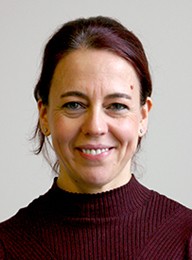 Monica joined the company in 2011 as a Senior Editor at Nature Climate Change. She was the first social science editor at Nature Research. She has handled original research and review articles across the entire breadth of social sciences, and interdisciplinary articles integrating natural and social science disciplines in the context of climate and global environmental change. In 2015 she moved to Nature, where she served as Senior Strategy Editor developing the company’s editorial and publishing strategy about sustainability, before becoming Chief Editor of Nature Sustainability in 2016. Monica completed her doctoral studies in environmental and development economics at the University of Naples Federico II, Italy; she then held a visiting professor position at University Tecnológico de Monterrey, Mexico, and subsequently joined the sustainable consumption team at WWF-UK where she gained invaluable experience about the challenges of bridging the gap between research and policy domains. Monica is based in the Berlin office. Monica joined the company in 2011 as a Senior Editor at Nature Climate Change. She was the first social science editor at Nature Research. She has handled original research and review articles across the entire breadth of social sciences, and interdisciplinary articles integrating natural and social science disciplines in the context of climate and global environmental change. In 2015 she moved to Nature, where she served as Senior Strategy Editor developing the company’s editorial and publishing strategy about sustainability, before becoming Chief Editor of Nature Sustainability in 2016. Monica completed her doctoral studies in environmental and development economics at the University of Naples Federico II, Italy; she then held a visiting professor position at University Tecnológico de Monterrey, Mexico, and subsequently joined the sustainable consumption team at WWF-UK where she gained invaluable experience about the challenges of bridging the gap between research and policy domains. Monica is based in the Berlin office.
m.contestabile@nature.com
Senior Editor: William R. Burnside
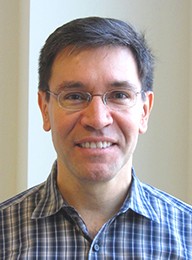 Bill joined Nature Sustainability in March 2017 as an Associate Editor. He handles manuscripts from ecology, other life science, biogeography, biogeochemistry, soil science, agronomy, oceanography, and anthropology. Before joining Nature Research, Bill was a Postdoctoral Fellow at the National Socio-Environmental Synthesis Center (SESYNC), in Annapolis, Maryland, working on macroecological approaches to sustainability science. Bill majored in Human Biology at Stanford University and holds an M.S. in Natural Resources & Environment from the University of Michigan. His PhD, in Biology from the University of New Mexico, focused on the metabolic basis of ecological patterns and processes, primarily focused on human use of space, resources, and energy but also including the metabolic ecology of insects and other small ectotherms. Much of this work has been interdisciplinary and has involved collaborations with anthropologists and computer scientists. Bill is based in the New York office. Bill joined Nature Sustainability in March 2017 as an Associate Editor. He handles manuscripts from ecology, other life science, biogeography, biogeochemistry, soil science, agronomy, oceanography, and anthropology. Before joining Nature Research, Bill was a Postdoctoral Fellow at the National Socio-Environmental Synthesis Center (SESYNC), in Annapolis, Maryland, working on macroecological approaches to sustainability science. Bill majored in Human Biology at Stanford University and holds an M.S. in Natural Resources & Environment from the University of Michigan. His PhD, in Biology from the University of New Mexico, focused on the metabolic basis of ecological patterns and processes, primarily focused on human use of space, resources, and energy but also including the metabolic ecology of insects and other small ectotherms. Much of this work has been interdisciplinary and has involved collaborations with anthropologists and computer scientists. Bill is based in the New York office.
william.burnside@us.nature.com
Senior Editor: Aiora Zabala
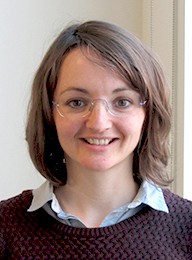 Aiora joined Nature Sustainability in March 2017 as Associate Editor. She handles manuscripts from environmental policy, economics, international development, political science, and psychology as well as geography and GIS. Before joining Nature Research, Aiora was teaching associate of environmental economics and statistics at the Cambridge Centre for Environment, Energy and Natural Resource Governance (CEENRG) and research consultant at the Center for International Forestry Research (CIFOR), working at the interface between farm-based livelihoods and conservation. Aiora studied Environmental Sciences and doctoral courses in Ecological Economics, both at the Autonomous University of Barcelona, and she holds an MSc in Environmental Policy from the University of Oxford and a PhD from the University of Cambridge, focused on motivations and incentives for sustainable land-use practices in the tropical forest frontier. Aiora is based in the London office. Aiora joined Nature Sustainability in March 2017 as Associate Editor. She handles manuscripts from environmental policy, economics, international development, political science, and psychology as well as geography and GIS. Before joining Nature Research, Aiora was teaching associate of environmental economics and statistics at the Cambridge Centre for Environment, Energy and Natural Resource Governance (CEENRG) and research consultant at the Center for International Forestry Research (CIFOR), working at the interface between farm-based livelihoods and conservation. Aiora studied Environmental Sciences and doctoral courses in Ecological Economics, both at the Autonomous University of Barcelona, and she holds an MSc in Environmental Policy from the University of Oxford and a PhD from the University of Cambridge, focused on motivations and incentives for sustainable land-use practices in the tropical forest frontier. Aiora is based in the London office.
aiora.zabala@nature.com
Senior Editor: Yaoqing Zhang
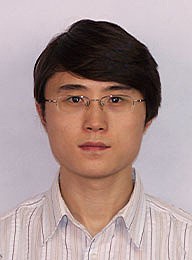 Yaoqing joined Nature Sustainability in May 2020 as a Senior Editor. He handles manuscripts in the broad areas of engineering and technology tackling system-wide and technological solutions to sustainability issues. Yaoqing began his editorial career at Nature Communications in June 2016 where he covered a range of topics in energy chemistry, with a particular focus on electrochemical energy storage and solid state ionics. Prior to joining Nature Research, Yaoqing held an assistant professorship at the Tokyo Institute of Technology working on the synthesis, discovery and characterization of electride materials that have potential applications in catalysis or superconductivity. He obtained a PhD in chemistry from the University of St Andrews where he focused his studies at the interface of solid state chemistry, electrochemistry and ceramics, and then conducted postdoctoral research on condensed matter physics in Japan. Yaoqing is based in the Shanghai office. Yaoqing joined Nature Sustainability in May 2020 as a Senior Editor. He handles manuscripts in the broad areas of engineering and technology tackling system-wide and technological solutions to sustainability issues. Yaoqing began his editorial career at Nature Communications in June 2016 where he covered a range of topics in energy chemistry, with a particular focus on electrochemical energy storage and solid state ionics. Prior to joining Nature Research, Yaoqing held an assistant professorship at the Tokyo Institute of Technology working on the synthesis, discovery and characterization of electride materials that have potential applications in catalysis or superconductivity. He obtained a PhD in chemistry from the University of St Andrews where he focused his studies at the interface of solid state chemistry, electrochemistry and ceramics, and then conducted postdoctoral research on condensed matter physics in Japan. Yaoqing is based in the Shanghai office.
Yaoqing.Zhang@nature.com
Associate Editor: Ryan M. Scarrow
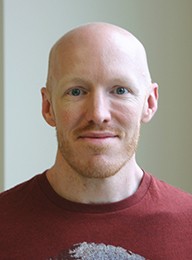 Ryan joined Nature Research in March 2017 as an Associate Editor serving both Nature Sustainability and Nature Plants. He handles manuscripts from sociology, anthropology, demography, urban studies, science & technology studies, water & society, and the humanities. Before joining Nature Research, Ryan received his PhD in sociology from the Ohio State University with a focus on the political economy of water scarcity across cities in the American West. Ryan has a degree in history from the University of Kansas and studied also at the Columbia Graduate School of Journalism. His interests cover a broad range of areas pertaining to sustainability & culture, socio-ecological resilience, urban systems, and the history, theory, and philosophy of social organization and the environment. Ryan is based in the London office. Ryan joined Nature Research in March 2017 as an Associate Editor serving both Nature Sustainability and Nature Plants. He handles manuscripts from sociology, anthropology, demography, urban studies, science & technology studies, water & society, and the humanities. Before joining Nature Research, Ryan received his PhD in sociology from the Ohio State University with a focus on the political economy of water scarcity across cities in the American West. Ryan has a degree in history from the University of Kansas and studied also at the Columbia Graduate School of Journalism. His interests cover a broad range of areas pertaining to sustainability & culture, socio-ecological resilience, urban systems, and the history, theory, and philosophy of social organization and the environment. Ryan is based in the London office.
ryan.scarrow@nature.com
Associate Editor: Stephanie M. Olen
 Stephanie joined Nature Sustainability in July 2021 as an Associate Editor. She handles manuscripts across broad topics in Earth science, physical geography, climate science, and remote sensing. Before joining Nature Research, Stephanie was a Postdoctoral Fellow in the Remote Sensing of Earth Surface Processes research group at the University of Potsdam, in Potsdam, Germany, working on the application of satellite synthetic aperture radar to natural hazard monitoring and land surface classification. Stephanie studied Geology and Mathematics at Bryn Mawr College and holds an M.S. in Geological Sciences from the University of Michigan. Stephanie earned her Ph.D. in Earth and Environmental Science from the University of Potsdam, applying geochemical analysis, remote sensing, and computational approaches to uncover the influence of the South Asian Monsoon System and vegetation on erosion rates in the central Himalaya. Stephanie is based in the Berlin office. Stephanie joined Nature Sustainability in July 2021 as an Associate Editor. She handles manuscripts across broad topics in Earth science, physical geography, climate science, and remote sensing. Before joining Nature Research, Stephanie was a Postdoctoral Fellow in the Remote Sensing of Earth Surface Processes research group at the University of Potsdam, in Potsdam, Germany, working on the application of satellite synthetic aperture radar to natural hazard monitoring and land surface classification. Stephanie studied Geology and Mathematics at Bryn Mawr College and holds an M.S. in Geological Sciences from the University of Michigan. Stephanie earned her Ph.D. in Earth and Environmental Science from the University of Potsdam, applying geochemical analysis, remote sensing, and computational approaches to uncover the influence of the South Asian Monsoon System and vegetation on erosion rates in the central Himalaya. Stephanie is based in the Berlin office.
stephanie.olen@springernature.com
|








 字顺( Alphabetical List of Journals):
 返回页首
返回页首 