期刊名称:NPJ MATERIALS DEGRADATION
 期刊简介(About the journal)
投稿须知(Instructions to Authors)
编辑部信息(Editorial Board) 期刊简介(About the journal)
投稿须知(Instructions to Authors)
编辑部信息(Editorial Board)
About the journal
Aims & Scope
npj Materials Degradation publishes high-quality papers reporting significant advances in basic and applied research on the degradation of metallic and non-metallic materials. We broadly define ‘materials degradation’ as a reduction in the ability of a material to perform its task in-service as a result of environmental exposure. Topics of interest to the journal include – though are not limited to – the following: corrosion of metals; long-term stability and durability of glasses, minerals and cements; weathering and light/heat induced damage to polymers; degradation of ceramics by extreme temperatures/stresses; irradiation-induced damage to metals and ceramics etc.
Representative journal scope includes:
- Degradation of metals, glasses, minerals, polymers, ceramics, cements and composites in natural and engineered environments, as a result of various stimuli: chemical, heat, light, mechanical stress, irradiation etc., and combinations of these.
- Computational and experimental studies of degradation mechanisms and kinetics.
- Characterization of degradation, in terms of changes to structure and material properties, by traditional and emerging techniques.
- New approaches and technologies for enhancing resistance to degradation, ranging from materials design to coatings.
- Inspection and monitoring techniques for materials in-service, such as sensing technologies.
As well as publishing original research papers, npj Materials Degradation also welcomes the submission of critical Reviews, thought-provoking Perspectives, and Brief Communications. We are additionally interested in discussion pieces from industry that address challenges faced in the application of materials in demanding environments.
Instructions to Authors
Content types
On this page: Article | Brief Communication | Comment | Editorial | Matters Arising | Perspective | Review
Article
An Article is a substantial research study, with a complex story often involving several techniques or approaches. The main text (excluding abstract, Methods, references and figure legends) is typically no more than 4,000-4,500 words. The abstract is typically 150 words, unreferenced. Articles have up to 10 display items (figures and/or tables). An Introduction section is followed by sections headed Results, Discussion, Methods and Data Availability. The Results and Methods should be divided by topical subheadings; the Discussion may contain subheadings at the editors' discretion. As a guideline, Articles have around 60 references.
Articles include received and accepted dates. They may be accompanied by supplementary information. Articles are peer reviewed.
Brief Communication
A Brief Communication reports a concise study of high quality and broad interest. Brief Communications begin with a brief unreferenced abstract (3 sentences, usually no more than 70 words). The main text is typically 1,000-1,500 words, including abstract, references and figure legends, and contains no headings. Brief Communications normally have no more than 2 display items, although this may be flexible at the discretion of the editor. Brief Communications include a Methods and Data Availability section. As a guideline, Brief Communications have around 20 references.
Brief Communications include received and accepted dates. They may be accompanied by supplementary information. Brief Communications are peer reviewed.
Comment is a very flexible format; Comments may be on policy, science and society or purely scientific issues. The main criteria are that they should be of immediate interest to a broad readership and should be written in an accessible, non-technical style. Their length is typically 1,000-2,000 words. Because the content is variable, the format is also flexible. Comments do not normally contain primary research data, although they may present 'sociological' data (funding trends, demographics, bibliographic data, etc.). References typically do not exceed 25.
Comments include received and accepted dates. Comments are typically peer reviewed.
Editorial
Editorials are written by the senior editorial team of the journal, under the direction of the Editor-in-Chief. They are not typically peer reviewed, although they can be at the discretion of the editorial team, and are published with received and accepted dates.
Matters Arising
Important scientific comments and clarifications on peer-reviewed articles published in npj Materials Degradation may be submitted as Matters Arising. The guidelines for Matters Arising are outlined here.
Perspective
Perspective is a format for scholarly reviews and discussions of the primary research literature that are too technical for a Commentary but do not meet the criteria for a Review—either because the scope is too narrow, or because the author is advocating a controversial position or a speculative hypothesis or discussing work primarily from one group. Two reviews advocating opposite sides in a research controversy are normally published as Perspectives. The text should not normally exceed 3,000 words. As a guideline, Perspectives allow up to 70 references.
Perspectives are always peer reviewed and include received and accepted dates.
Review
A Review is an authoritative, balanced and scholarly survey of recent developments in a research field. The requirement for balance need not prevent authors from proposing a specific viewpoint, but if there are controversies in the field, the authors must treat them in an even-handed way. Reviews are normally 3,000-4,000 words, and illustrations are strongly encouraged. References are typically limited to 100, with exceptions possible. Citations should be selective. The scope of a Review should be broad enough that it is not dominated by the work of a single laboratory, and particularly not by the authors' own work.
Reviews include received and accepted dates. Reviews are always peer reviewed.
Editorial Board
Editors-in-Chief
 Nick Birbilis, PhD Nick Birbilis, PhD
Deputy Dean, College of Engineering and Computer Science
Australian National University
Canberra, Australia
Professor Nick Birbilis has expertise in the area of materials durability, including corrosion, corrosion protection, electrochemical materials science and the design of corrosion resistant light alloys. More broadly, he has worked on materials characterization, and the use of advanced manufacturing for the development of more sustainable and durable materials, including bio-inspired and hybrid materials. Previously he was Head of the Materials Science and Engineering department at Monash University, where he also obtained his PhD and Bachelor's degrees. He has significant editorial experience, having previously been an editor for a number of corrosion-focused journals.
 Stéphane Gin, PhD Stéphane Gin, PhD
Senior Scientist, CEA
French Atomic Energies and Alternatives Energy Commission
Waste Treatment Department
Marcoule site, France
Dr Gin received a Masters degree from Orléans University, France, and a PhD degree from Poitiers University, France. Since 1995, he worked at the French Atomic Energies and Alternatives Energy Commission (CEA) of Marcoule, France, working on nuclear and commercial glass corrosion problems. Since 2001 he has led the 'long term behaviour of HLW glass' group within CEA; a team of 25 people focusing on fundamental and applied issues related to the geological disposal of high-level and intermediate-level waste. From 2012 to 2013 he was a visiting scientist at Pacific Northwest National Laboratory, USA. Dr Gin is also a member of advisory boards on high-level waste management in Belgium, the UK and the USA.
Associate Editors
 Claire Corkhill, PhD Claire Corkhill, PhD
EPSRC Early Career Research Fellow, Nuclear Materials Corrosion
The University of Sheffield
Sheffield, UK
Dr Corkhill is a Research Fellow in mineralogy and materials science, with her research focusing on understanding the structure and chemistry of material surfaces and their relationship to mechanisms and kinetics of surface dissolution. In 2009 she completed her PhD in sulphide mineral surface dissolution, with applications to environmental remediation (University of Manchester, UK). Claire holds an EPSRC Early Career Research Fellowship, in which she focuses on nuclear waste material dissolution, including oxide ceramics (e.g. doped-UO2), aluminoborosilicate glasses and cement materials. Recent work includes development of synchrotron-based diffraction and spectroscopy methodologies to observe slow surface dissolution processes over long timescales.
 Damien Daval, PhD Damien Daval, PhD
Laboratoire d'HYdrologie et de GEochimie de Strasbourg
CNRS-INSU
Strasbourg, France
Dr Daval is a CNRS research scientist working at the Laboratory of Hydrology and Geochemistry of Strasbourg (LHyGeS). After graduating in physical chemistry (University of Grenoble, France), he obtained a PhD in geochemistry from the University of Paris 7 in 2009. He was appointed at the LHyGeS in 2012 after a two-year postdoc at the Lawrence Berkeley National Lab. His research aims at linking the microstructural modifications of the surface of dissolving geomaterials (silicate and carbonate minerals, silicate glass) to their aqueous reactivity. The fields of application of his studies encompass fundamental and applied issues, ranging from ambient (hydration of cements, bioweathering) to hydrothermal (geothermics, CO2 sequestration) conditions.
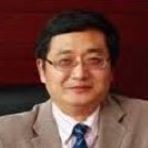 Xiaogang Li, PhD Xiaogang Li, PhD
University of Science & Technology Beijing
Beijing, China
Professor Li is Director of the National Environmental Corrosion Platform at the University of Science and Technology Beijing, where he leads one of the largest corrosion research groups worldwide. He is also the Chief Scientist of the National Key Basic Research and Development Program in marine corrosion. In 2011, he was selected to be a Member of the International Corrosion Council. He has published multiple papers in the areas of environmental (atmospheric, soil and marine) corrosion and its control, environmental degradation of organic coatings and polymeric materials, stress corrosion cracking and corrosion modeling and simulation.
 Ingrid Milošev, PhD Ingrid Milošev, PhD
Head, Department of Physical and Organic Chemistry
Jožef Stefan Institute
Ljubljana, Slovenia
Dr Milošev received her Bachelors degree at the University of Zagreb in 1986 and PhD at the University Ljubljana in 1993. She is currently a full Professor at the Jožef Stefan International Postgradute School and is also a research scientist at the Valdoltra Orthopaedic Hospital. Her main research interests are corrosion and degradation of engineering and biomedical metallic materials in different environments, and various modes of corrosion protection from inhibitors to coatings. She is also in charge of the implant retrieval programme at the Valdoltra Hospital.
Mary Ryan, PhD
Imperial College London
London, UK
Professor Ryan currently holds a Royal Academy of Engineering Research Chair in Interfacial Nanoscience in the Department of Materials at Imperial College London. Her research spans several areas: understanding how nanomaterials behave in different systems, in biology and environmental science, and the design of nanomaterials systems. She has worked extensively in the field of passivity and localised corrosion, and the use of synchrotron X-ray based approaches for the in-situ study of reactive electrochemical systems. She was elected Fellow of the Royal Academy of Engineering in 2015 and is also a Fellow of the Institute of Corrosion, the Institute of Materials, Minerals and Mining. She graduated from the University of Manchester and previously worked at Brookhaven National Laboratory.
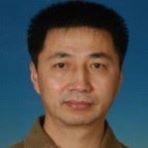 Fuhui Wang, PhD Fuhui Wang, PhD
School of Materials Science and Engineering
Northeastern University
Shenyang, China
Professor Wang received his Bachelors degree from Harbin Engineering University in 1983, Masters from Institute of Metal Research, Chinese Academy of Sciences (CAS) in 1986 and PhD from Institute of Corrosion and Protection of Metals (CAS) in 1992. He became a full Professor at the Institute of Corrosion and Protection of Metals in 1994 and was appointed as the Director of the State Key Lab for Corrosion and Protection, Institute of Metal Research (CAS) in 1999. His main interests focus on fundamental and applied research of corrosion at high temperatures, including oxidation and hot-corrosion resistant nanocrystalline coatings.
Editorial Board Members
Carlos Arroyave, Antonio Nariño University, Colombia
David M. Bastidas, The University of Akron, United States
Philippe Dillmann, CEA Saclay, France
Jincheng Du, University of North Texas, United States
Damien Feron, CEA, France
Pieter Gijsman, Royal DSM, the Netherlands
Jaime Grunlan, Texas A&M University, United States
Carol Jantzen, Savannah River National Laboratory, United States
Joseph Kish, McMaster University, Canada
Anton Kokalj, Jožef Stefan Institute, Slovenia
Rudy Konings, European Commission, Joint Research Centre, Germany
Maik Lang, University of Tennessee, United States
Jie Lian, Rensselaer Polytechnic Institute, United States
Xingbo Liu, West Virginia University, United States
Jenifer S. Locke, The Ohio State University, United States
Barbara Lothenbach, Empa, Switzerland
Gregory Lumpkin, ANSTO, Australia
Andreas Lüttge, University of Bremen, Germany
Philippe Marcus, Chimie ParisTech, France
Robert Maxwell, Lawrence Livermore National Laboratory, United States
Michael Ojovan, Imperial College London, United Kingdom
Sylvain Peuget, CEA, France
Eric M. Pierce, Oak Ridge National Laboratory, United States
Encarnación Ruiz-Agudo, University of Granada, Spain
Namurata Sathirachinda Palsson, National Metal and Materials Technology Center, Thailand
Eiji Tada, Tokyo Institute of Technology, Japan
Herman Terryn, Vrije Universiteit Brussel, Belgium
Sandrine Therias, Institut de Chimie de Clermont-Ferrand, CNRS, France
Mira Todorova, Max-Planck-Institut für Eisenforschung GmbH, Germany
Blas Pedro Uberuaga, Los Alamos National Laboratory, United States
Liping Wang, Ningbo Institute of Industrial Technology, Chinese Academy of Sciences, China
Peng Wang, Institute of Oceanology, Chinese Academy of Sciences, China
Claire E. White, Princeton University, United States
Dake Xu, Institute of Metal Research, Chinese Academy of Sciences, China
Dawei Zhang, University of Science and Technology Beijing, China
Tao Zhang, Northeastern University, China
|

