期刊名称:NPJ DIGITAL MEDICINE
 期刊简介(About the journal)
投稿须知(Instructions to Authors)
编辑部信息(Editorial Board) 期刊简介(About the journal)
投稿须知(Instructions to Authors)
编辑部信息(Editorial Board)
About the journal
Aims and scope
npj Digital Medicine is an online open-access journal dedicated to publishing high quality peer-reviewed research in all aspects of digital medicine including the clinical implementation of digital and mobile technologies, virtual healthcare, data analytic methodologies and innovative sensor development to provide the necessary data and longitudinal monitoring to best inform the broadest medical community. The journal aims to guide innovation and the transformation of health and healthcare through the incorporation of novel digital and mobile technologies.
Instructions to Authors
For Authors & Referees
This section will help you when preparing your manuscript for initial submission and resubmission to npj Digital Medicine. Please ensure that you familiarise yourself with our editorial policies as outlined in our Guide for Authors before submitting your work. An overview of key information on submitting primary research is also available in our brief guide to manuscript submission in PDF format.
For information on our aims and scope, as well as our content types, please refer to the About the journal section.
All manuscripts must be submitted electronically through our online submission system, from which you can upload the cover letter and manuscript files (text, figures and supplementary information, including video) and check on the status of your manuscripts during the review process.
Revised manuscripts should be uploaded through the link provided in the editor's decision letter. Please do not submit revisions as new manuscripts.
The authors must include copies of all related manuscripts with any overlap in authorship that are under consideration or in press elsewhere.
Guide for Authors
View our guide for authors for detailed information on editorial criteria, and how manuscripts are handled by our editors between submission and acceptance for publication.
Manuscripts submitted to npj Digital Medicine do not need to adhere to our formatting requirements at the point of initial submission; formatting requirements only apply at the time of acceptance.
 Download Guide for Authors Download Guide for Authors
Guide for Reviewers
View our guide for reviewers for detailed information on policies, workflows and criteria.
Journal Policies
Our editorial and publishing policies are consistent with those of the Nature portfolio journals.
Language Editing
Even though no paper will be rejected for poor language, authors occasionally receive feedback from editors and reviewers regarding language and grammar usage in their manuscripts. You may wish to consider asking a colleague to read your manuscript and/or to use a professional editing service such as those provided by our affiliates Nature Research Editing Service or American Journal Experts. Please note that the use of a language editing service is not a requirement for publication in npj Digital Medicine.
Editorial Board
Editor-in-Chief
 Joseph C. Kvedar, MD Joseph C. Kvedar, MD
Harvard Medical School
Mass General Brigham
Boston, USA
At Mass General Brigham (Partners HealthCare), Dr. Joe Kvedar has focused on driving innovation, creating the market, and gaining acceptance for telehealth for nearly three decades. He is now applying his expertise, insights, and influence to advance the adoption of telehealth and virtual care technologies at the national level. Dr. Kvedar is Professor of Dermatology at Harvard Medical School and President of the American Telemedicine Association (ATA). He is co-chair the American Medical Association's (AMA) Digital Medicine Payment Advisory Group (DMPAG), which works to ensure widespread coverage of telehealth and remote patient monitoring, and successfully established several new provider codes for telehealth reimbursement through the CPT process. Dr. Kvedar is also a member of the AAMC’s (Association of American Medical Colleges) telehealth committee, creating tools that will enable medical schools and residency programs to integrate telehealth into the training of future practitioners. He is the author of two books on digital health: The Internet of Healthy Things and The New Mobile Age: How Technology Will Extend the Healthspan and Optimize the Lifespan.
Deputy Editor
 Alan Godfrey, PhD Alan Godfrey, PhD
Northumbria University
Newcastle upon Tyne, UK
His major research is in algorithms for data science and analytics in healthcare. This includes areas of artificial intelligence, machine learning, data mining and multidimensional signal processing. His has specific interests in inertial sensor-based wearable technology to examine human movement, such as gait analysis.
Founding Editors and Scientific Advisors
 Steven R. Steinhubl, MD Steven R. Steinhubl, MD
Scripps Research Translational Institute
CA, USA
Steve Steinhubl's research activities have covered a broad range of topics in cardiology, with a primary early focus on trials of novel antithrombotic therapies for the treatment and prevention of cardiovascular disease, and more recently on the application of an integrated systems-based approach to the optimal identification, communication and treatment of an individual's risk for various manifestations of cardiovascular disease. He has been principal investigator or helped lead over a dozen large-scale, international randomized trials.
 Eric Topol, MD Eric Topol, MD
Scripps Research Translational Institute
CA, USA
Eric Topol is a practicing cardiologist at Scripps in La Jolla, California, and is widely credited for Cleveland Clinic's status as the leading center for heart care. Dr. Topol leads the flagship NIH supported Scripps Research Translational Institute and is a co-Founder of the West Wireless Health Institute. His research focus is on individualized medicine, using the genome and digital technologies to understand each person at the biologic, physiologic granular level to determine appropriate therapies and prevention. He has pioneered the development of many medications that are routinely used in medical practice including t-PA, Plavix, Angiomax and ReoPro and was the first physician to raise safety concerns on Vioxx.
Associate Editors
 Prof. Jessilyn P. Dunn, PhD Prof. Jessilyn P. Dunn, PhD
Duke University
NC, USA
Dr. Jessilyn Dunn is an Assistant Professor of Biomedical Engineering and Biostatistics & Bioinformatics at Duke University. Her primary areas of research focus on biomedical data science and mobile health; her work includes multi-omics, wearable sensor, and electronic health records integration and digital biomarker discovery. Dr. Dunn is the Director of the BIG IDEAs Laboratory at Duke, whose goal is to detect, treat, and prevent chronic and acute diseases through digital health innovation. Dr. Dunn was an NIH Big Data to Knowledge (BD2K) Postdoctoral Fellow at Stanford and an NSF Graduate Research Fellow at Georgia Tech and Emory, as well as a visiting scholar at the US Centers for Disease Control and Prevention and the National Cardiovascular Research Institute in Madrid, Spain.
 Prof. Feng Dong Prof. Feng Dong
Head of the Human Centric AI Research Group
University of Strathclyde
Glasgow, Scotland
Prof. Dong's recent research has addressed a range of issues in AI including: computer vision and machine learning for the modelling and representation of human motions, blind motion deblur of natural images, adaptive texture synthesis for high fidelity images and inference based image based rendering, creative AI for computer graphics and animation, visualization and parallel computing (GPU) of large-scale data sets. He has significant experience in leading and managing collaborative research projects and teams across Europe to conduct externally funded cross-disciplinary research in AI.
 Sujay Kakarmath, MBBS, MS Sujay Kakarmath, MBBS, MS
MGH & BWH Center for Clinical Data Science
Partners Healthcare
MA, USA
Sujay Kakarmath is a physician and epidemiologist engaged in the development and validation of AI-supported clinical solutions. Previously, he led the data science team at Partners Connected Health Innovation, focused on evaluating digital health solutions designed to improve population health outcomes for heart failure and epilepsy patients. He also conducts global health research on population-level risk factors for non-communicable diseases.
 Thomas McCoy, MD Thomas McCoy, MD
Massachusetts General Hospital
MA, USA
Thomas McCoy is a physician-scientist focused on secondary use of data generated through routine care for clinical prediction and risk stratification. His research program is rooted in the acute care setting and efforts to use natural language processing applied to clinician-authored documentation as a means of quantifying poorly coded phenotypes. He leads the data platform at the Mass General Hospital (MGH) Center for Innovation and Digital Healthcare (CIDH).
 Melissa M. Medvedev, MD, PhD Melissa M. Medvedev, MD, PhD
University of California San Francisco
CA, USA
Melissa Medvedev is a physician-scientist with a background in global health, epidemiology, statistical analysis, and health technology innovation, including the development and application of AI methods. Her research focuses on risk prediction and the evaluation of maternal, neonatal, and early childhood interventions to promote survival and prevent disability. She has led numerous clinical trials and studies, consulted for and advised health tech companies (digital health, machine learning) and global initiatives, and is an alumnus of the Stanford Biodesign Innovation Fellowship.
 Evan D. Muse, MD, PhD, MCTI Evan D. Muse, MD, PhD, MCTI
Scripps Research Translational Institute
CA, USA
Evan D. Muse is a physician-scientist with research interests that mine the transition zone of digital medicine, genomics and cardiovascular disease. In addition to his clinical practice, he conducts research exploring the crosstalk of lipid and inflammatory networks in macrophage, with the goal of identifying new therapies for the prevention and treatment of atherosclerotic heart disease (atherosclerosis). He also conducts clinical trials in the genomics of cardiovascular diseases, including atrial fibrillation and heart attack.
 Declan P. O'Regan, FRCR, FRCP, PhD Declan P. O'Regan, FRCR, FRCP, PhD
MRC London Institute of Medical Sciences
London, United Kingdom
Declan O’Regan is a Professor of Imaging Sciences at Imperial College London and a Consultant Radiologist. He leads the Computational Cardiac Imaging group which uses machine learning to investigate the mechanisms underlying heart disease. His current research focusses on cardiac motion analysis to predict patient survival and applying imaging-genetics models to discover inherited causes of heart failure. He is also an educator on clinical applications of AI in radiology.
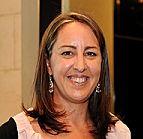 Prof. Julie Redfern Prof. Julie Redfern
Westmead Applied Research Centre
Faculty of Medicine and Health, University of Sydney
Sydney, Australia
Julie Redfern is a Professor of Public Health and a clinical physiotherapist. She has led clinical trials and epidemiology studies focussed on secondary prevention along with co-design, testing and implementation of digital health interventions. She is the current Academic Leader (Researcher Development) in the Faculty of Medicine and Health, University of Sydney, co-Chair of the Exercise, Prevention and Rehabilitation Council of the Cardiac Society of Australia and New Zealand and a World Heart Federation Emerging Leader.
 John A. Rogers, PhD John A. Rogers, PhD
McCormick School of Engineering and Neurological Society
Northwestern University
IL, USA
Dr. Rogers's research seeks to understand and exploit interesting characteristics of 'soft' materials, such as polymers, liquid crystals and biological tissues as well as hybrid combinations of them with unusual classes of micro/nanomaterials, in the form of ribbons, wires, membranes, tubes or related. Current research focuses on soft materials for conformal electronics, nanophotonic structures, microfluidic devices and microelectromechanical systems, all lately with an emphasis on bio-inspired and bio-integrated technologies.
 Daniel Ting, MD, PhD Daniel Ting, MD, PhD
Head, AI and Digital Innovation, Singapore National Eye Center
Duke-NUS Medical School
Singapore
Dr. Ting started his vitreo-fellowship training as an Associate Consultant in the Singapore National Eye Centre. In 2017, he was chosen to be the 2017 US-ASEAN Fulbright Scholar, representing Singapore to visit Johns Hopkins University (JHU) School of Medicine and Applied Physics Laboratory to deepen his understanding on the use of artificial intelligence, big data analytics and telemedicine in the field of Ophthalmology.
 John B. Torous, MD John B. Torous, MD
Beth Israel Deaconess Medical Center
Harvard Medical School
MA, USA
Dr. Torous is a board certified psychiatrist with a background in electrical engineering and computer sciences and enjoys exploring digital mental health. Dr. Torous is active in investigating the potential of mobile mental health technologies for psychiatry, developing smartphone tools for clinical research, leading clinical studies of smartphone apps for diverse mental illnesses and publishing on the research, ethical and patient perspectives of digital psychiatry.
 Jill Waalen, MD, MS, MPH Jill Waalen, MD, MS, MPH
Scripps Research Translational Institute
CA, USA
In addition to her role at TSRI, Dr. Waalen is also a Lecturer for Seminar in Preventive Medicine, and serves as Associate Director of the University of California San Diego-San Diego State University General Preventive Medicine Residency Program. Dr. Waalen also serves as director for several biostatistics courses focused on equipping scientists with the statistical knowledge and programming skills for enhanced analysis of their own data. She plans to continue her research at TSRI while providing biostatistics expertise to STSI investigators.
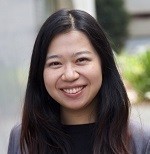 Zoie S. Y. Wilkins-Wong, PhD Zoie S. Y. Wilkins-Wong, PhD
St. Luke's International University
Tokyo, Japan
Zoie S.Y. Wilkins-Wong is an Associate Professor at St. Luke’s International University (Tokyo, Japan). Specialized in digital health innovation, Dr. Wong’s research expertise is in Artificial Intelligence for Patient Safety Improvement, Health Data Analytics, and Infectious Disease Modelling and Visualization. She has been actively involved in collaborative research at the interface between informaticians, computer scientists, statisticians, epidemiologists, practitioners and policy makers investigating a range of challenging problems in health innovation. Dr. Wong currently serves on the Roster of Experts for the World Health Organization (WHO) Digital Health Technical Advisory Group (DHTAG) and as a global member of International Medical Informatics Association (IMIA) Technology Assessment and Quality Development in Health Informatics Working Group (TAQD WG).
 Prof. Serena Yeung, PhD Prof. Serena Yeung, PhD
Stanford University
CA, USA
Serena Yeung is an Assistant Professor of Biomedical Data Science and, by courtesy, of Computer Science and of Electrical Engineering at Stanford University. Her research interests are in the areas of computer vision, machine learning, and deep learning, focusing on applications to healthcare. She also serves as Associate Director of Data Science for the Stanford Center for Artificial Intelligence in Medicine & Imaging (AIMI), and is affiliated with the Stanford Clinical Excellence Research Center (CERC).
Editorial Board Members
Rajesh Aggarwal, Digital Health Consultant, PA, USA
Rima Arnaout, University of California, San Francisco, CA, USA
Rong-Min Baek, Seoul National University, Seoul, South Korea
Varun Buch, MGH & BWH Center for Clinical Data Science, MA, USA
Yvonne Chan, Icahn School of Medicine at Mount Sinai, NY, USA
Yoon Sup Choi, Sungkyunkwan University, Seoul, South Korea
Ittai Dayan, Partners Healthcare, Boston, MA, USA
Maarten De Vos, KU Leuven, Leuven, Belgium
Hugh Harvey, Hardian Health, London, UK
Kwang-il Kim, Seoul National University, Seoul, South Korea
Dr. Joonseok Kim, The University of Alabama at Birmingham School of Medicine, AL, USA
Ju Young Kim, Seoul National University, Seoul, South Korea
Santosh Kumar, The University of Memphis, TN, USA
Alain Labrique, Johns Hopkins Bloomberg School of Public Health, MD, USA
Kris Laukens, University of Antwerp, Antwerp, Belgium
Ari Lightman, Carnegie Mellon University, PA, USA
Hongfang Liu, Mayo Clinic, MN, USA
Lara Mangravite, Sage Bionetworks, WA, USA
Donna Spruijt-Metz, University of Southern California, CA, USA
Veena Misra, North Carolina State University, NC, USA
Dr. Andrew R. J. Mitchell, Jersey General Hospital, St Helier, United Kingdom
Camille Nebeker, University of California, CA, USA
Jeffery Olgin, University of California San Francisco School of Medicine, CA, USA
Andrey Ostrovsky, Children's National Medical Center, Washington D.C., USA
Sanjay Purkayastha, Imperial College, London, London, UK
Giorgio Quer, Scripps Research Translational Institute, CA, USA
Emma Rich, University of Bath, Bath, UK
Hojjat Salmasian, Mass General Brigham / Harvard Medical School, MA, USA
Aenor J. Sawyer, University of California, San Francisco, CA ,USA
Bruce Schatz, University of Illinois at Urbana-Champaign, IL, USA
Stanley Y. Shaw, Harvard Medical School, MA, USA
Vivek Shetty, University of California Los Angeles, CA, USA
Brennan Spiegel, Cedars-Sinai Medical Center, CA, USA
Joseph Wang, University of California San Diego, CA, USA
Robyn Whittaker, University of Auckland, Auckland, New Zealand
Brenda K. Wiederhold, Virtual Reality Medical Center, CA, USA
Albert Chih-Chieh Yang, Harvard Medical School, MA, USA
|

