期刊名称:NPJ 2D MATERIALS AND APPLICATIONS
 期刊简介(About the journal)
投稿须知(Instructions to Authors)
编辑部信息(Editorial Board) 期刊简介(About the journal)
投稿须知(Instructions to Authors)
编辑部信息(Editorial Board)
About the journal
Aims & Scope
npj 2D Materials and Applications publishes papers on the fundamental behavior, synthesis, properties and applications of existing and emerging 2D materials. By selecting papers with the potential for impact, the journal aims to facilitate the transfer of the research of 2D materials into wide-ranging applications.
Representative journal scope includes:
- 2D materials in all their forms: graphene, transition metal dichalcogenides, phosphorene and molecular systems, including relevant allotropes and compounds, and topological materials
- fundamental understanding of their basic science
- synthesis by physical and chemical approaches
- behavior and properties: electronic, magnetic, spintronic, photonic, mechanical, including in heterostructures and other architectures
- applications: sensors, memory, high-frequency electronics, energy harvesting and storage, flexible electronics, water treatment, biomedical, thermal management.
Along with original research articles, opinion-based Perspectives and critical Reviews are also welcome, providing a forum through which the research and technological aspects of 2D materials can be openly discussed.
Instructions to Authors
This section will help you when preparing your manuscript for initial submission and resubmission to npj 2D Materials and Applications. Please ensure that you familiarise yourself with our editorial policies as outlined in our Guide for Authors before submitting your work. An overview of key information on submitting primary research is also available in our brief guide to manuscript submission in PDF format.
For information on our aims and scope, as well as our content types, please refer to the About the journal section.
All manuscripts must be submitted electronically through our online submission system, from which you can upload the cover letter and manuscript files (text, figures and supplementary information, including video) and check on the status of your manuscripts during the review process.
Revised manuscripts should be uploaded through the link provided in the editor's decision letter. Please do not submit revisions as new manuscripts.
The authors must include copies of all related manuscripts with any overlap in authorship that are under consideration or in press elsewhere.
Guide for Authors
View our guide for authors for detailed information on editorial criteria, and how manuscripts are handled by our editors between submission and acceptance for publication.
Manuscripts submitted to npj 2D Materials and Applications do not need to adhere to our formatting requirements at the point of initial submission; formatting requirements only apply at the time of acceptance.
 Download Guide for Authors Download Guide for Authors
Editorial Board
Editor-in-Chief
 Andras Kis Andras Kis
Institute of Electrical Engineering and Materials Science and Engineering Institute
École Polytechnique Fédérale de Lausanne
Lausanne, Switzerland
Professor Andras Kis received his Master's degree from the University of Zagreb, Croatia, and his PhD in Physics from EPFL in 2003. He worked as a postdoctoral researcher at the University of California, Berkeley from 2004. In 2008 he established a research group at EPFL dedicated to nanoelectronics based on two-dimensional semiconductors such as monolayers of transition metal dichalcogenides. His group demonstrated the first transistor based on a 2D semiconductor (monolayer MoS2) which had a high on/off ratio.
Associate Editors
 Deji Akinwande Deji Akinwande
Associate Professor, Electrical and Computer Engineering
University of Texas at Austin
TX, USA
Professor Deji Akinwande received his PhD degree in Electrical Engineering from Stanford University in 2009, where he conducted research on the synthesis, device physics and circuit applications of carbon nanotubes and graphene. His Master's research in Applied Physics at Case Western Reserve University pioneered the design and development of near-field microwave probe tips for nondestructive imaging and studies of materials.
 Goki Eda Goki Eda
Department of Physics and Department of Chemistry
National University of Singapore
Singapore, Singapore
Professor Goki Eda holds joint appointments in the Centre for Advanced 2D Materials and the Solar Energy Research Institute of Singapore at National University of Singapore. He received his BA in Physics from the International Christian University in Tokyo, MS in Materials Science and Engineering from Worcester Polytechnic Institute and PhD in the same discipline from Rutgers University in 2009. He has completed extensive work on solution-processing and electronic property characterization of a variety of 2D materials such as graphene oxide and MoS2. His current research is on charge and exciton dynamics in van der Waals solids.
 Thomas Heine Thomas Heine
Professor of Theoretical Chemistry
Technische Universität Dresden
Dresden, Germany
In addition to his appointment at Technische Universität Dresden, Professor Thomas Heine is also Adjunct Professor of Theoretical Physics at Jacobs University Bremen. In 1995 he received his Diploma (Physics) at TU Clausthal, and in 1999 his PhD (Physics) at TU Dresden. After postdoctoral stages at University of Bologna and University of Geneva, he obtained his venia legendi in Physical Chemistry at TU Dresden in 2006. In 2008 he started his research group as Associate Professor at Jacobs University Bremen, promoted to Full Professor in 2011. In 2015 he accepted the Chair of Theoretical Chemistry at Leipzig University. His research focuses on the computational science of nanostructured materials, in particular of two-dimensional crystals and molecular frameworks.
 Valeria Nicolosi Valeria Nicolosi
Professor of Nanomaterials and Advanced Microscopy, School of Chemistry, CRANN & AMBER
Trinity College
Dublin, Ireland
Professor Valeria Nicolosi is an expert in the field of processing of low-dimensional nanostructures and high-end electron microscopy. She received a BSc in Chemistry from the University of Catania in 2001 and a PhD in Physics in 2006 from Trinity College Dublin. In 2012 she became ERC Research Professor at the School of Chemistry, Trinity College Dublin, and principal investigator in CRANN nanoscience centre.
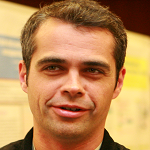 Luís Miguel Nunes Pereira Luís Miguel Nunes Pereira
Associate Professor, Departamento de Ciência dos Materiais
FCT/UNL
Caparica, Portugal
Professor Luis Pereira received his Engineering degree in Materials Science in 2001 and PhD in 2008 from Universidade Nova de Lisboa. His PhD focused on polycrystalline silicon and high k dielectrics for TFT applications. He was involved in a team that demonstrated the first transistors made of oxides with paper as the dielectric. He is also a researcher at CENIMAT/I3N, with current research interests on the design and synthesis of 1D, 2D and 3D inorganic and hybrid nanostructures, chiral cellulose nanocomposites, functional micro and nanofibers and their integration on printed chromogenic, electronic and electrochemical devices.
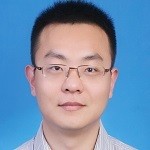 Xinran Wang Xinran Wang
School of Electronic Science and Engineering
Nanjing University
Nanjing, China
Professor Xinran Wang is a Chang Jiang Professor and doctoral adviser at the School of Electronic Science and Engineering at Nanjing University. In 2010 he received his PhD in physics from Stanford University on the synthesis and electronic devices of graphene. His research interests include the growth, physical properties and device applications of two-dimensional materials. He developed the world's first high Ion/Ioff ratio graphene nanoribbon field-effect transistor. From 2010 to 2011, he was a postdoctoral researcher at Stanford University and at the University of Illinois at Urbana-Champaign. In 2011 he returned to Nanjing and started his own laboratory.
Editorial Board Members
Kaustav Banerjee, University of California, Santa Barbara, USA
Qiaoliang Bao, Monash University, Australia
Cinzia Casiraghi, University of Manchester, Manchester, UK
Andres Castellanos-Gomez, Instituto de Ciencia de Materiales de Madrid, Consejo superior de Investigaciones Cientificas, Spain
Yang Chai, The Hong Kong Polytechnic University, Hong Kong
Jinwoo Cheon, Yonsei University, Korea
Manish Chhowalla, Rutgers University, Piscataway, USA
Camilla Coletti, Istituto Italiano di Tecnologia, Italy
Xiangfeng Duan, University of California, Los Angeles, USA
Georg Duesberg, Trinity College Dublin, Ireland
Lukas Matthias Eng, Technische Universität Dresden, Germany
Gianluca Fiori, University of Pisa, Italy
Susan Fullerton-Shirey, University of Pittsburgh, USA
Slaven Garaj, National University of Singapore, Singapore
Mar García-Hernández, Instituto de Ciencia de Materiales de Madrid, Consejo superior de Investigaciones Cientificas, Spain
Jun He, National Center for Nanoscience and Technology, China
Alexander Holleitner, Technical University of Munich, Germany
Seongil Im, Yonsei University, Korea
Jong Min Kim, University of Cambridge, UK
Frank Koppens, ICFO-The Institute of Photonic Sciences, Spain
Kostas Kostarelos, University of Manchester, United Kingdom
Marko Kralj, Institute of Physics, Croatia
Alessandra Lanzara, Lawrence Berkeley National Laboratory, USA
Young Hee Lee, Sungkyunkwan University, South Korea
Lain-Jong Li, King Abdullah University of Science and Technology, Saudi Arabia
Thomas Lippert, Paul Scherrer Institut, Switzerland
Jun Lou, Rice University, USA
Yuerui (Larry) Lu, The Australian National University, Australia
Kazunari Matsuda, Kyoto University, Japan
Feng Miao, Nanjing University, China
Thomas Mueller, Vienna University of Technology, Austria
Doron Naveh, Bar-Ilan University, Israel
Barbaros Özyilmaz, National University of Singapore, Singapore
Amalia Patane, University of Nottingham, UK
Hailin Peng, Peking University, China
Paulina Plochocka, Centre National de la Recherche Scientifique (CNRS), France
Francesco Priolo, University of Catania, Italy
Ashwin Ramasubramaniam, University of Massachusetts Amherst, USA
Elisa Riedo, New York University, USA
Maya Bar Sadan, Ben Gurion University, Israel
Deblina Sarkar, Massachusetts Institute of Technology, USA
Taishi Takenobu, Nagoya University, Japan
Ping-Heng Tan, University of Chinese Academy of Sciences, China
Mauricio Terrones, Penn State University, USA
Sefaattin Tongay, Arizona State University, USA
Luisa Torsi, Università degli Studi di Bari "Aldo Moro", Italy
H.S. Philip Wong, Stanford University, USA
Fengnian Xia, Yale University, USA
Jian-Bin Xu, The Chinese University of Hong Kong, Hong Kong
Xiaodong Xu, University of Washington, USA
Oleg Yazyev, Ecole Polytechnique Fédérale de Lausanne, Switzerland
Guangyu Zhang, Institute of Physics, Chinese Academy of Sciences, China
Hua Zhang, Nanyang Technological University, Singapore
Nature Research
Managing Editor: Bo Liu, PhD
Editorial Director, Physical Sciences, Community Journals, NPJs: David Gevaux, PhD
Peer Review Assistants: Priyanka De, Ayesha Pathan
Editorial Assistants: Rosie Tobutt and Caterina Timu
Senior Editorial Assistant: Molly Jiang
Editorial Assistant Supervisor: Yasmin Esmaeili
Editorial Administration Manager: Colm Pollard
Publisher/Head of Outreach and Partnerships EMEA: Warren Raye, PhD
Director, Strategic Partnerships Americas & Global NPJs: Andrea Macaluso
Assistant Production Editor: Annabelle Topliss
Production Editors: David Pentney and Annika Jesse
Senior Production Editor: Jessica Hart
Managing Production Editor: Kate Neil
Operations and Partnerships Manager: Esther Trinh
Senior Marketing Manager: Heather Dunphy
Head of Researcher Experience: Katherine Arundell
VP Editorial, Nature Research and Community Journals: Meredith LeMasurier, PhD
VP Commercial, Nature Research Group: Andrew Douglas
Chief Editorial Advisor, Nature Research: Magdalena Skipper, PhD
|

