期刊名称:THERAPEUTICS AND CLINICAL RISK MANAGEMENT
 期刊简介(About the journal)
投稿须知(Instructions to Authors)
编辑部信息(Editorial Board) 期刊简介(About the journal)
投稿须知(Instructions to Authors)
编辑部信息(Editorial Board)
About the journal
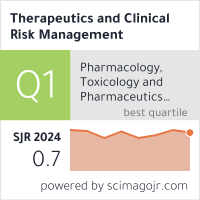
Therapeutics and Clinical Risk Management
ISSN: 1178-203X
ISSN 1176-6336 (Print) - went to online only in 2009
An international, peer-reviewed open access journal of clinical therapeutics and risk management, focusing on concise rapid reporting of clinical studies in all therapeutic areas, outcomes, safety, and programs for the effective, safe, and sustained use of medicines.
This journal is a member of and subscribes to the principles of the Committee on Publication Ethics (COPE).
Journal Impact Factor: 1.343
Indexed online:
-
Science Citation Index Expanded (also known as SciSearch®)
-
Journal Citation Reports/Science Edition
-
Current Contents®/Clinical Medicine
-
Embase, Scopus and the Elsevier Bibliographic databases
-
Index Copernicus
-
ICAAP
-
Directory of Open Access Journals (DOAJ)
-
OAIster: The Open Access Initiative
Publication Processing Fees - Author Location
USA/Canada |
UK |
Rest-of-World |
|
US$2200.00 |
£1395.00 |
€1595.00 |
Aims and Scope
Therapeutics and Clinical Risk Management is an international, peer-reviewed journal of clinical therapeutics and risk management, focusing on concise rapid reporting of clinical studies in all therapeutic areas, outcomes, safety, and programs for the effective, safe, and sustained use of medicines.
Instructions to Authors
Preparation of Manuscript
Include:
- Forename(s) and surnames of authors (see Authorship section below)
- Author affiliations: department, institution, city, state, country
- Abstract 300 words
- 3–6 keywords
- Running header (shortened title)
- Corresponding author: name, physical address, phone, fax, email
- Reference list
- Double-spacing
- 3-cm margins
- Page numbers
- Clear concise language
- American spelling
- Ensure tables and figures are cited
- The preferred electronic format for text is Microsoft Word
- Manuscripts will be accepted in LaTeX as long as the native LaTeX and a PDF is also supplied
- Use International Systems of Units (SI) symbols and recognized abbreviations for units of measurement
- Do not punctuate abbreviations eg, et al, ie
- Spell out acronyms in the first instance in the abstract and paper
- Word counts are not specified. In general, shorter items range from 1000 to 3000 words and reviews from 3000 to 7,500
- Generic drug names are used in text, tables, and figures
- Suppliers of drugs, equipment, and other brand-name material are credited in parentheses (company, name, city, state, country)
- If molecular sequences are used, provide a statement that the data have been deposited in a publicly accessible database, eg, GenBank, and indicate the database accession number.
While the editors fully understand the extra challenges posed to authors whose native language is not English, we must ask that all manuscripts be reviewed and edited by a native speaker of English with expertise in that area prior to submission.
Authorship
Authorship credit should be based on:
1) Substantial contributions to conception and design, acquisition of data, or analysis and interpretation of data;
2) Drafting the article or revising it critically for important intellectual content;
3) Final approval of the version to be published; and
4) Agreement to be accountable for all aspects of the work in ensuring that questions related to the accuracy or integrity of any part of the work are appropriately investigated and resolved.
Authors should meet conditions 1, 2, 3, and 4.
When a large, multicenter group has conducted the work, the group should identify the individuals who accept direct responsibility for the manuscript (3). These individuals should fully meet the criteria for authorship/contributorship defined above, and editors will ask these individuals to complete journal-specific author and conflict-of-interest disclosure forms. When submitting a manuscript authored by a group, the corresponding author should clearly indicate the preferred citation and identify all individual authors as well as the group name. Journals generally list other members of the group in the Acknowledgments. The NLM indexes the group name and the names of individuals the group has identified as being directly responsible for the manuscript; it also lists the names of collaborators if they are listed in Acknowledgments.
Acquisition of funding, collection of data, or general supervision of the research group alone does not constitute authorship.
All persons designated as authors should qualify for authorship, and all those who qualify should be listed.
Each author should have participated sufficiently in the work to take public responsibility for appropriate portions of the content.
Increasingly, authorship of multicenter trials is attributed to a group. All members of the group who are named as authors should fully meet the above criteria for authorship/contributorship.
The group should jointly make decisions about contributors/authors before submitting the manuscript for publication. The corresponding author/guarantor should be prepared to explain the presence and order of these individuals. It is not the role of editors to make authorship/contributorship decisions or to arbitrate conflicts related to authorship.
Contributors Listed in Acknowledgments
All contributors who do not meet the criteria for authorship should be listed in an acknowledgments section. Examples of those who might be acknowledged include a person who provided purely technical help, writing assistance, or a department chairperson who provided only general support. Authors should declare whether they had assistance with study design, data collection, data analysis, or manuscript preparation. If such assistance was available, the authors should disclose the identity of the individuals who provided this assistance and the entity that supported it in the published article. Financial and material support should also be acknowledged.
Groups of persons who have contributed materially to the paper but whose contributions do not justify authorship may be listed under such headings as “clinical investigators” or “participating investigators,” and their function or contribution should be described—for example, “served as scientific advisors,” “critically reviewed the study proposal,” “collected data,” or “provided and cared for study patients.” Because readers may infer their endorsement of the data and conclusions, these persons must give written permission to be acknowledged.
Please note: the Authorship and “Contributors Listed in Acknowledgments” sections are reprinted from the ICMJE Uniform Requirements for Manuscripts Submitted to Biomedical Journals. Dove Medical Press prepared this reprint. The ICMJE has not endorsed nor approved the contents of this reprint. The official version of the Uniform Requirements for Manuscripts Submitted to Biomedical Journals is located at http://www.icmje.org/. Users should cite this official version when citing the document.
Related Authors
Where authors of a paper are related this should be disclosed at the time of submission. Please provide details of the family relationship between such authors.
Figures and Tables
- Submit as separate files and also as one combined file
- Submit figures as JPG files
- Number consecutively
- Provide a descriptive heading/legend
- Place abbreviations immediately below the table
- Use superscript a, b, c… as identifiers
- Supply Line Art 900 dpi, Combination (Line Art + Halftone) 900 dpi, Halftone 300 dpi
- Graphics downloaded from Web pages are NOT acceptable
- Submit multi-panel figures, ie with parts labeled a,b,c,d, as one file
Supplementary Data
Any supplementary data should be kept to 6 typeset pages or 2,400 words. If you have any more than this you should provide a link to the supplementary data on an external website, your institute’s website for example, and/or Dove Medical Press may be able to upload the raw supplementary data to the http://www.dovepress.com/ website and provide a link in your paper. We welcome video files either as supplementary data or as part of the actual manuscript to show operations, procedures, etc.
Letter to the Editor
Manuscripts submitted as a Letter to the Editor:
- Should relate to a paper previously published in a Dove Medical Press journal, or address an issue of wider concern within the scope of the journal;
- Have a word count of no more than 3,600 words;
- May contain figures and tables (see specifications for these above);
- Have references formatted in the Dove Medical Press style.
Submission of Manuscript
- All manuscripts should be submitted via our website.
- By doing so you agree to the terms and conditions of submission
- Keep a backup and hard copies of the material submitted
Pre-submissions
- Authors are welcome to send an abstract or draft manuscript to obtain a view from the Editor about the suitability of their paper. Please email here and include which journal you are interested in submitting your manuscript to. Our Editors will do a quick review (not peer review) of your paper and advise if they believe it is appropriate for submission to their journal. This will be based on subject matter vs the aims and scope of the journal. It will not be a full review of your manuscript.
Reference Style
See Reference Style Guidelines
Proofs
- You will receive the typeset page proofs for approval
- Check amendments made by the editor have not rendered the material inaccurate
- Check you have answered all the editor’s queries
- Ensure your corrections are minimal and absolutely necessary
- Mark the adjustments clearly in the text and margins, and keep a copy of what you send to the editor
- Notify the editorial office of all corrections within 72 hours of your receipt of the material
- Ensure all authors sign and return the Author Approval and final page of Publication Agreement

All Dove journals are members of and subscribe to the principles of the Committee on Publication Ethics (COPE).
We also support the international standards for editors and authors that were developed at the 2nd World Conference on Research Integrity in Singapore in 2010.
Editorial Board
Dr Walsh
Editor-in-Chief: Professor Garry Walsh
Dr Walsh is Reader in Inflammation and Immunity and Principal Investigator, of the Asthmatic and Allergic Inflammation Group, School of Medicine and Dentistry, University of Aberdeen, UK. His group is part of the Immunology Research Programme, within the Division of Applied Medicine that was rated fourth equal in the UK in the 2008 research assessment exercise.
Dr Walsh is honorary Professor of Inflammation and Immunity, School of Medicine, Trinity College, Dublin, Ireland. His major research interests involve elucidation of the molecular mechanisms controlling the initiation and resolution of the inflammatory processes underlying asthma, COPD and allergic disease. Dr Walsh has published over 60 peer-reviewed articles in international journals together with more than 60 invited editorials, reviews and book chapters. To date these publications have been cited over 3,300 times; giving an h-index of 33 (source ISI Web of Knowledge). Dr Walsh has been an invited speaker and/or chairman at over fifty international meetings. In addition to his role as the Editor-in-Chief of Therapeutics and Clinical Risk Management he is the Founding Editor of the Journal of Cell Death; and Clinical Medicine - Therapeutics. He is also an Editorial Board Member of the Journal of Allergy (Section Head), International Journal of Biomedical Science, Biologics: targets and therapy, The Open Immunology Journal, The Open Inflammation Journal, The Open Allergy Journal and the Journal of Organ Dysfunction.
Dr Walsh is a regular reviewer for over 40 clinical and scientific journals and serves as a grant reviewer for UK and international funding bodies. Since 2003 he has been a European Commission evaluation expert for FP6 and FP7 and is currently Vice-Chair of the Evaluation Panel for Marie Curie Mobility Actions. Dr Walsh is a Member of the MRC College of Experts affiliated to the Infection and Immunity Board and a Member of Lung Cellular and Molecular Immunology (LCMI) Special Emphasis Panel, National Institutes of Health USA.
Dr Kheir
Associate Editor in Chief
Associate Editor: Dr Nadir Kheir
Dr Nadir Kheir is a Fellow with New Zealand College of Pharmacists and Member of the Pharmaceutical Society of New Zealand, the Clinical Advisory Pharmacists Association and New Zealand's Healthcare Pharmacists' Association. While in New Zealand, he functioned as Pharmaceutical Care Consultant and Clinical Pharmacy Consultant.
Dr Kheirs Doctoral degree (supervised by Professor John Shaw and Dr Lynne Emmerton and awarded by Otago University, New Zealand) looked at validation of asthma health outcome measures in the New Zealand context and specifically addressed three components: asthma (as a model of a chronic condition), quality of life, and the emerging practice of Pharmaceutical Care. In 2003 he was awarded Graduate Certificate in Clinical Education from The University of New South Wales, Australia.
Dr Kheir's research work and interests spans from health outcomes, with emphasis on Health-related Quality of Life, to ethics and professionalism in pharmacy practice and the application and evaluation of Pharmaceutical Care practices. He has published and spoke as invited guest speaker in numerous international conferences, seminars and workshop activities.
His professional and academic career included his posts of Superintendent of Pharmacy Department, Qatar Petroleum (Qatar) and lecturer with the School of Pharmacy at Auckland University (New Zealand), where he was among the foundation team of the School and was Clinical Pharmacy Course Coordinator. While in these roles, Dr Kheir spear-headed the introduction of clinical pharmacy at the Royal Hospital, proposed Patient-Integrated-Teaching (PIT) at the Pharmacy in Auckland University and developed the Pharmacy Strategic Plan of the Division of Pharmacy, Medical Services, in Qatar Petroleum.
He is currently an Assistant Professor and Founding Chair of Clinical Pharmacy and Practice at the College of Pharmacy in Qatar University, Qatar and an Honorary Senior Clinical Lecturer with the School of Pharmacy, University of Auckland.
Dr Wang
Associate Editor in Chief
Associate Editor - China: Dr De Yun Wang
Dr. Wang De Yun is currently a Senior Research Scientist and Associate Professor (Tenure) and Director of Research, Department of Otolaryngology at the National University of Singapore and a member of the Research Task Force and Biomedical Safety Committees of the National University Health System (NUHS) of Singapore.
He is an Associate Editor of Allergy and member of the editorial boards of more than twenty allergy, ENT and medical journals and a member of expert committee and writing groups for several international and European guidelines and consensus reports in allergic rhinitis and rhinosinusitis including the European White Paper in Allergy, European Position Paper in Treatment of Allergic Rhinitis, International Consensus Report on Allergic Rhinitis in Childhood, WHO Initiative: Allergic Rhinitis and its Impact on Asthma (ARIA 2001 and 2008 Update), and European Position Paper on Rhinosinusitis and Nasal Polyps (EPOS, 2007 and 2012).
He has published over 180 papers in prestigious medical journals and 30 book chapters, and has been invited to give more than 300 lectures at scientific meetings worldwide. He received the Sam Sanders Basic Science Award given by the American Academy Otolaryngic Allergy (AAOA) in 2003, and the Faculty Research Excellence Award 2012 given by the Yong Loo Lin School of Medicine, National University of Singapore. He has been the Vice President of the Beijing Ear Nose and Throat College since 2004, and visiting professor of four top medical universities in China.
Professor Zhang
Associate Editor in Chief
Associate Editor: Professor Ruiwen Zhang
Ruiwen Zhang, M.D., Ph.D., D.A.B.T., is Professor of Clinical Pharmacology, Pharmacology and Toxicology and Director of Cancer Pharmacology Laboratory at the University of Alabama, Birmingham (UAB). He also is Senior Scientist in the UAB Comprehensive Cancer Center, Center for Aging, Center for AIDS Research, Chemoprevention Center, Gene Therapy Center, and Clinical Nutrition Research Center. With over 18 years of experience in the field of biomedical research, particularly in the area of clinical pharmacology and therapeutics as well as toxicological research, Dr. Zhang’s research has been publicly funded by the National Institutes of Health and Department of Defense, and also funded by pharmaceutical and biotech companies. He has fiveUS patents and has published more than 110 original papers, 2 books, and more than 50 invited reviews/book chapters. He has been an invited speaker for more than 60 prestigious universities, institutions, and organizations and made more than 125 presentations at national and international scientific meetings. He has been a member of Study Section or Review Panel of National Institutes of Health, Department of Defense Breast and Prostate Cancer Research Programs, Center for Diseases Control and Prevention, and Cancer Research UK, among others. Dr. Zhang is a member of Editorial Board of several journals such as Current Medicinal Chemistry, Current Cancer Drug Targets, Letters in Drug Design and Discovery, Medicinal Chemistry Reviews –Online, Drug Design Reviews -Online, Medicinal Chemistry, Journal of Biological Sciences, Recent Patent Reviews on Anti -Cancer Drug Discovery, Current Medicinal Chemistry-Anti-Cancer Agents, and Scientific Journals International. In addition, Dr. Zhang has been a reviewer for more than 45 scientific journals. He is a certified toxicologist by the American Board of Toxicology (D.A.B.T.). Dr. Zhang has been a member of US FDA Medical Devices Advisory Committee (Clinical Chemistry and Clinical Toxicology Panel) since 2003. Dr. Zhang’s expertise includes: pharmacology and therapeutics, clinical pharmacology and molecular therapy, toxicology, clinical toxicology and clinical chemistry, drug discovery and preclinical drug development, clinical trials and clinical drug development, nutriceutucals, cancer therapy, genetic therapy and antisense therapy, cancer early detection, cancer prevention, and occupational and environmental medicine. Dr. Zhang has extensive experience in training graduate and post-graduate students and clinical investigators.
Honorary Editorial Board
Sally Adams, National Patient Safety Agency, London, UK
Peter C Adamson, Chief, Division of Clinical Pharmacology and Therapeutics, The Children's Hospital of Philadelphia, Philadelphia, USA
Shahin Akhondzadeh, Professor of Clinical Psychopharmacology, Roozbeh Psychiatric Hospital, Tehran University of Medical Sciences, Tehran, Iran
Angelo Antonini, Professor, Parkinson Institute, Milan, Italy
Professor Bartlett
United States
Jimmy Bartlett, Professor and Interim Chair, Department of Optometry, School of Optometry, University of Alabama at Birmingham, Birmingham, Alabama, USA
Keith Beard, Victoria Infirmary, Glasgow, UK
G. Walter Canonica, Professor, Allergy and Respiratory Diseases, DIMI, Department of Internal Medicine, University of Genoa, Genoa, Italy
Giorgio L Colombo, Professor, University of Pavia, Faculty of Pharmacy, Pavia, Italy
Professor Doull
United States
John Doull, Professor Emeritus, The University of Kansas Medical Centre, Kansas City, USA
Mark Duman, MRPharmS, Director, Monmouth Partners and Non Executive Director, Patient Information Forum, London, UK
Alfio Ferlito, Professor of Otolaryngology, University of Udine School of Medicine, Italy
Dr Greenberg
United States
Howard Greenberg, CRU Medical Director, Clinical Associate Professor of Medicine, Jefferson University, Philadelphia, USA
Eric Holmboe, Department of Medicine, Waterbury Hospital, Waterbury, USA
Professor Koo
United States
Peter Koo, Clinical Professor of Pharmacy, Department of Clinical Pharmacy and Pharmaceutical Services, University of California, San Francisco, USA
Bagher Larijani, Professor, Director and Chief Scientific Officer, Endocrinology and Metabolism Research Center, Tehran University of Medical Sciences, Iran
Professor Murray
United States
Michael D. Murray, Bucke Professor of Pharmacy Practice, Purdue University, Indianapolis, USA
Andrea Nicolini, Professor, Clinical Researcher at the Department of Internal Medicine, University of Pisa, Pisa, Italy
Faustino R. Pérez-López, Professor of Obstetrics and Gynecology, University of Zaragoza Hospital Clínico, Zaragoza, Spain
Professor Pichert
United States
James W Pichert, Professor of Medical Education and Administration, Vanderbilt University, Nashville, USA
Professor Pirmohamed
United Kingdom
Munir Pirmohamed, Professor of Clinical Pharmacology, University of Liverpool, Liverpool, UK
Professor Sewell
United Kingdom
Graham J Sewell, Professor of Clinical Pharmacy, University of Bath, Bath, UK
Professor Spigelman
Australia
Allan Spigelman, Professor of Surgery, University of New South Wales, Clinical Associate Dean, St. Vincent's Clinical School, Director Cancer Services, Sydney, Australia
Professor Struthers
United Kingdom
Allan D Struthers, Professor of Cardiovascular Medicine and Therapeutics, Ninewells Hospital, Dundee, UK
Professor Valodia
South Africa
Praneet Valodia, Professor, University of Western Cape, Cape Town, South Africa
Dr Voelter-Mahlknecht
Germany
Susanne Friederike Voelter-Mahlknecht, José Carreras Research Center, Saarland University Medical Center, Germany
Scott Waldman, Samuel MV Hamilton Professor of Medicine and Professor of Biochemistry and Molecular Pharmacology, Director of the Division of Clinical Pharmacology, Thomas Jefferson University, Philadelphia, USA
De Yun Wang, Senior Research Scientist, Department of Otolaryngology, National University of Singapore, Singapore
Professor Webb
United Kingdom
David Webb, Professor of Therapeutics and Clinical Pharmacology, Centre for Cardiovascular Science, University of Edinburgh, Edinburgh, UK
Dr Woloshynowych
United Kingdom
Maria Woloshynowych, Lecturer in Clinical Safety, Imperial College London, London, UK
Professor Zhou
United States
Shufeng Zhou, Prof of Pharmacology & Molecular Medicine, Assoc Vice President of Global Medical Development, Assoc Dean of International Research, & Chair of the Depart of Pharmaceutical Sciences, Colleges of Pharmacy and Medicine, University of South Florida, Tampa, Florida, USA
|



