期刊名称:GEOBIOLOGY
 期刊简介(About the journal)
投稿须知(Instructions to Authors)
编辑部信息(Editorial Board) 期刊简介(About the journal)
投稿须知(Instructions to Authors)
编辑部信息(Editorial Board)
About the journal
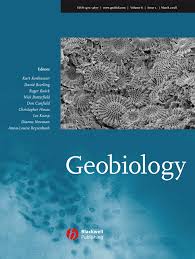
The field of geobiology explores the relationship between life and the Earth's physical and chemical environment. Geobiology, launched in 2003, aims to provide a natural home for geobiological research, allowing the cross-fertilization of critical ideas, and promoting cooperation and advancement in this emerging field. We also aim to provide you with a forum for the rapid publication of your results in an international journal of high standing. We are particularly interested in papers crossing disciplines and containing both geological and biological elements.
Geobiology invites submission of high-quality articles in the following areas:
Origins and evolution of life
Evolution of the atmosphere, hydrosphere and biosphere
The sedimentary rock record and geobiology of critical intervals
Paleobiology and evolutionary ecology
Environmental microbiology
Biogeochemistry and global elemental cycles
Microbe-mineral interactions
Biomarkers
Molecular ecology and phylogenetics
Geobiology offers as standard practice double-blind reviewing, in which both authors and reviewers are anonymous to each other. This feature, while new to this area of science, is usual in other rapidly progressing and highly competitive disciplines. We supply this service to ensure the highest quality publication procedures, whereby all submitted manuscripts receive equal treatment and all criticism is truly free and fair.
Geobiology was launched in 2003 with the aim to provide a natural home for geobiological research, allowing the cross-fertilization of critical ideas, and promoting cooperation and advancement in this emerging field. Geobiology is also a forum for the rapid publication of your results in an international high-quality journal of high standing where papers crossing disciplines and containing both geological and biological elements are particularly welcome.Geobiology invites submission of high-quality articles in the following areas:
- Origins and evolution of life
- Evolution of the atmosphere, hydrosphere and biosphere
- The sedimentary rock record and geobiology of critical intervals
- Paleobiology and evolutionary ecology
- Environmental microbiology
- Biogeochemistry and global elemental cycles
- Microbe-mineral interactions
- Biomarkers
- Molecular ecology and phylogenetics
Instructions to Authors
Geobiology is now accepting manuscripts for review online.
To submit your manuscript online simply go to the submission site at: http://mc.manuscriptcentral.com/geobiology
You will be required to register and upload your manuscript. We recommend that you upload text as Microscoft Word, RTF, PostScript or PDF and figures as JPEG, GIF, TIFF and EPS. Accepted papers (including any tables) should be submitted as Microsoft Word or RTF files for text and TIF or EPS files for figures.
Preference will be given to papers of less than 12 journal pages (one journal page is equivalent to approximately 1400 words, or word equivalents). Authors wishing to submit longer manuscripts or review articles should contact the Editor in Chief first to discuss their plans.
Editor in Chief
Kurt Konhauser
Department of Earth and Atmospheric Sciences
University of Alberta
Edmonton
Alberta TG6 2E3
Canada
E-mail: kurtk@ualberta.ca
The Editors retain the right to modify the style and length of a contribution (major changes being agreed with the corresponding author) and to decide the time of publication. Reviewing will be double-blind (authors anonymous, reviewers anonymous), unless otherwise requested.
Author material archive policy
Please note that unless specifically requested, Wiley-Blackwell will dispose of all hardcopy or electronic material submitted six months after publication. If you require the return of any material submitted, please inform the editorial office or production editor as soon as possible if you have not yet done so.
Manuscripts
Manuscripts should be typed with double spacing on one side of the paper on A4 (297 x 210 mm), or letter paper with 2.5-cm margins. Pages should be numbered consecutively, including those of acknowledgements, references, tables and figure legends. Papers must be in English and spelling should conform to the Concise Oxford Dictionary of Current English. Authors are advised to retain a copy of the paper in case of loss as the Editors cannot accept responsibility for loss or damage. Papers will be acknowledged on receipt.
The typescript should include a title page with a concise, but informative, title of no more than 25 words and a short running title (There should also be an informative abstract comprising a summary of no more than 300 words. The main body of the text should be arranged under no more than three different levels of heading.
Pre-submission English-language editing
Authors for whom English is a second language may choose to have their manuscript professionally edited before submission to improve the English. A list of independent suppliers of editing services can be found here. All services are paid for and arranged by the author, and use of one of these services does not guarantee acceptance or preference for publication.
Units, symbols and abbreviations
SI units are mandatory. Statistics and measurements should be given in numeric form, e.g. 2 m, except where the number begins a sentence. When a number is used to identify a feature, it should be given in figures with the feature capitalised (e.g. Section 10, Locality 5). Unusual acronyms and abbreviations should be spelt out in full and technical terms explained the first time they appear in the article.
References
Authors should use the system illustrated below. Only full articles that have been published or are 'in press' may be included in the reference list. In the text references should be cited by giving the author's name with the year of publication in parentheses, and should be given in date order (Bethke, 1983; Borja & Dreiss, 1990) and, for three or more authors, Miller et al. (1977). When different papers with the same first author and the same year are cited, a, b, c, etc., should be put after the year of publication.
References should be listed in alphabetical order at the end of the paper in the following standard form, giving the names of all authors and with the names of publications given in full:
Grotzinger JP, Kasting JF (1993) New constraints on Precambrian ocean composition. Journal of Geology, 101, 235-243.
Knoll AH, Holland HD (1995) Oxygen and Proterozoic evolution: an update. In: Effects of Past Global Change on Life (ed. Stanley S). National Academy of Science Press, Washington, pp. 1-17.
Ward PD, Brownlee D (2000) Rare Earth: Why Complex Life is Uncommon in the Universe. Copernicus, New York.
We recommend the use of a tool such as EndNote or Reference Manager for reference management and formatting.
EndNote reference styles can be searched for here:http://www.endnote.com/support/enstyles.asp
Reference Manager reference styles can be searched for here:http://www.refman.com/support/rmstyles.asp
Tables
Tables must be typed on separate sheets. They should be numbered consecutively with Arabic numerals. Tables should be typed as text using tabs to align columns. Vertical lines should not be used to align columns. Column headings should be brief, with units of measurement in parentheses. Please do not use graphics software to create tables. All other illustrations including photographs are classified as figures and should be numbered consecutively.
Figures
On acceptance of manuscript please send us digital versions of your figures if at all possible. EPS and TIFF files are preferable, but please consult our Web site for complete instructions (URLs below). Note that your paper will go through production more quickly if your figures do not have to be redrawn or relabelled. Please ensure that electronic artwork is prepared such that, after reduction to fit across one column (80 mm) or a full page width (170 mm) all lettering will be clear and easy to read. Subpanels of multipanel figures should be labelled with lower-case roman letters, (a), (b), etc., at the top left-hand corner of each section, if possible, (i) within the panel of a line diagram or (ii) to the left of or below a half-tone. Multipanel figures that have common axes need not have all axes labelled if the abscissa axis closest to the bottom of the page or the ordinate axis closest to the left are also valid for those axes further up the page or further to the right respectively. Final lettering, after reduction, should be a minimum of 8 point (2 mm tall). Avoid using tints if possible. If they are absolutely necessary please make them coarse. Do not incorporate artwork into text files.
Full details of electronic artwork submission guidelines can be found at :
http://authorservices.wiley.com/bauthor/illustration.asp
Each illustration must have a caption that makes the material completely understandable without reference to the text. Captions must be typed on a separate sheet within the manuscript.
Data that is integral to the paper must be made available in such a way as to enable readers to replicate, verify and build upon the conclusions published in the paper. Any restriction on the availability of this data must be disclosed at the time of submission. Data may be included as part of the main article where practical. We recommend that data for which public repositories are widely used, and are accessible to all, should be deposited in such a repository prior to publication. The appropriate linking details and identifier(s) should then be included in the publication and where possible the repository, to facilitate linking between the journal article and the data. If such a repository does not exist, data should be included as supporting information to the published paper or authors should agree to make their data available upon reasonable request.
Colour illustrations
The Journal welcomes colour illustrations. These will normally incur a page charge but, at the editors discretion, may be published at no cost to the author (any applications for free colour should be made to the editor at the time that a paper is being submitted to the journal). Any author submitting colour illustrations for publication must forward a completed and signed Colour Work Agreement to the Managing Editor with their manuscript. Charges for colour are shown on the form.
In the event that an author is not able to cover the costs of reproducing colour figures in colour in the printed version of the journal, Geobiology offers authors the opportunity to reproduce colour figures in colour for free in the online version of the article (but they will still appear in black and white in the print version). If an author wishes to take advantage of this free colour-on-the-web service, they should liaise with the Editorial Office to ensure that the appropriate documentation (colour work agreement form) is completed for the Publisher.
Mathematics
In-line equations should be typed as text. Use of graphics programs and 'equation editors' should be avoided within the body of the text, unless part of commonly available word-processing packages (Word, WordPerfect). Symbols should be defined after first use.
Book reviews
Books for review should be sent to Editor in Chief.
Electronic publication
The Journal will be published online as well as in paper copy. Authors are encouraged to use the online version to include colour illustrations, large data sets, 3-D or moving images and should contact the Production Editor for further information, preferably prior to submission. Examples of the type of additional material which may be included can be found at www.blackwell-science.com/demos/.
Proofs
The corresponding author will receive an email alert containing a link to a web site. A working e-mail address must therefore be provided for the corresponding author. The proof can be downloaded as a PDF (portable document format) file from this site. Acrobat Reader will be required in order to read this file. This software can be downloaded (free of charge) from the following web site:
http://www.adobe.com/products/acrobat/readstep2.html.
This will enable the file to be opened, read on screen and printed out in order for any corrections to be added. Further instructions will be sent with the proof. Hard copy proofs will be posted if no e-mail address is available. Excessive changes made by the author in the proofs, excluding typesetting errors, will be charged separately.
Early View
Geobiology is covered by the Early View service.
Early View articles are complete full-text articles published online in advance of their publication in a printed issue. Articles are therefore available as soon as they are ready, rather than having to wait for the next scheduled print issue. Early View articles are complete and final. They have been fully reviewed, revised and edited for publication, and the authors' final corrections have been incorporated.
Because they are in final form, no changes can be made after online publication. The nature of Early View articles means that they do not yet have volume, issue or page numbers, so OnlineEarly articles cannot be cited in the traditional way. They are therefore given a Digital Object Identifier (DOI), which allows the article to be cited and tracked before it is allocated to an issue. After print publication, the DOI remains valid and can continue to be used to cite and access the article. More information about DOIs can be found on the Web: http://www.doi.org/faq.html
Offprints
A PDF offprint of the online published article will be provided free of charge to the corresponding author, and may be distributed subject to the Publisher's terms and conditions. Paper offprints of the printed published article may be purchased if ordered via the method stipulated on the instructions that will accompany the proofs. Printed offprints are posted to the correspondence address given for the paper unless a different address is specified when ordered. Note that it is not uncommon for printed offprints to take up to eight weeks to arrive after publication of the journal. For order enquiries please email: offprint@cosprinters.com
Cover photograph
If you have a photograph that would be suitable for the front cover of Geobiology please contact the Editor in Chief.
Copyright Transfer Agreement
Authors will be required to sign an Copyright Transfer Agreement (CTA) for all papers accepted for publication. Signature of the CTA is a condition of publication and papers will not be passed to the publisher for production unless a signed form has been received. Please note that signature of the Copyright Transfer Agreement does not affect ownership of copyright in the material. (Government employees need to complete the Author Warranty sections, although copyright in such cases does not need to be assigned). After submission authors will retain the right to publish their paper in various medium/circumstances (please see the form for further details). To assist authors an appropriate form will be supplied by the editorial office. Alternatively, authors may like to download a copy of the form from www.wiley.com/go/ctaaglobal.
Online production tracking is now available for your article through Author Services.
Author Services enables authors to track their article - once it has been accepted - through the production process to publication online and in print. Authors can check the status of their articles online and choose to receive automated e-mails at key stages of production. The author will receive an e-mail with a unique link that enables them to register and have their article automatically added to the system. Please ensure that a complete e-mail address is provided when submitting the manuscript. Visit http://authorservices.wiley.com/bauthor/ for more details on online production tracking and for a wealth of resources including FAQs and tips on article preparation, submission and more.
Editorial Board
Editor in Chief
Kurt Konhauser, University of Alberta, Canada
kurtk@ualberta.ca
Subject Editors
Ancient Atmospheres and Paleobiology
David Beerling, University of Sheffield, UK
D.J.Beerling@sheffield.ac.uk
Ancient Earth Systems
Roger Buick, University of Washington, USA
buick@ess.washington.edu
Co-Evolution of Environment and Life
Lee Kump, Pennsylvania State University, USA
kump@geosc.psu.edu
Geomicrobiology and Trace Metal Dynamics
Andreas Kappler, Eberhard-Karls-University Tübingen, Germany
andreas.kappler@uni-tuebingen.De
Microbial Ecology
Anna-Louise Reysenbach, Portland State University, USA
reysenbacha@pdx.edu
Microbial and Molecular Evolution
Christopher House, Pennsylvania State University, USA
chouse@geosc.psu.edu
Modern Biogeochemical Cycles
Don Canfield, University of Odense, Denmark
dec@biology.sdu.dk
Molecular Geomicrobiology
Dianne Newman, Massachusetts Institute of Technology, USA
dkn@mit.edu
Paleobiology
Nicholas J. Butterfield, University of Cambridge, UK
njb1005@esc.cam.ac.uk
Editorial Advisory Board
Robert Aller, Marine Sciences Research Center, Stony Brook University, USA
Jan Amend, Department of Earth and Planetary Sciences, Washington University, USA
Neil Banerjee, Department of Geological Sciences, University of Western Ontario, Canada
Stefan Bengtson, Department of Palaeozoology, Swedish Museum of Natural History, Sweden
Karim Benzerara, Institut de Physique du Globe de Paris, IMPMC, France
Antje Boetius, Max Planck Institute for Marine Microbiology, Germany
Tanja Bosak, Department of Earth, Atmospheric, and Planetary Sciences, Massachusetts Institute of Technology, USA
Susan Brantley, Department of Geosciences, Pennsylvania State University, USA
Gordon Brown, Department of Geological & Environmental Sciences, Stanford University, USA
Kathleen Campbell, Department of Geology, University of Aukland, New Zealand
David Catling, Department of Earth Sciences, University of Bristol, UK
Frank Corsetti, Department of Earth Sciences, University of Southern California, USA
Steven D'Hondt, Graduate School of Oceanography, University of Rhode Island, USA
Maarten De Wit, Department of Geological Sciences, University of Cape Town, South Africa
Dave Des Marais, NASA Ames Research Centre, USA
Katrina Edwards, Department of Biological Sciences, University of Southern California, USA
Paul Falkowski, Department of Geological Science, Rutgers University, USA
James Farquhar, Department of Geology, University of Maryland, USA
Grant Ferris, Department of Geology, University of Toronto, Canada
Danielle Fortin, Department of Earth Sciences, University of Ottawa, Canada
Chris Francis, Department of Geological and Environmental Sciences, Stanford University, USA
James Fredrickson, Pacific Northwest National Laboratory, USA
Katherine Freeman, Department of Geosciences, The Pennsylvania State University, USA
Tori Hoehler, Exobiology Branch, NASA Ames Research Center, USA
Bill Innskeep, Department of Land Resources & Environmental Sciences, Montana State University, USA
Linda Ivany, Department of Earth Sciences, Syracuse University, USA
James Kasting, Department of Geosciences, Pennsylvania State University, USA
Andy Knoll, Department of Earth and Planetary Sciences, Harvard University, USA
Jon Lloyd, School of Earth, Atmospheric and Environmental Sciences, University of Manchester, UK
Derek Lovley, Department of Microbiology, University of Massachusetts, USA
Timothy Lyons, Department of Earth Sciences, University of California, USA
Judith McKenzie, Geological Institute, Swiss Federal Institute of Technology, Switzerland
Stephen Mojzsis, Department of Geological Sciences, University of Colorado, USA
Euan Nisbet, Geology Department, Royal Holloway University of London, UK
Victoria Orphan, Division of Geological and Planetary Sciences, California Institute of Technology, USA
Ann Pearson, Department of Earth and Planetary Sciences, Harvard University, USA
Susannah Porter, Department of Earth Science, University of California, USA
Simon Poulton, School of Civil Engineering and Geosciences, University of Newcastle, UK
Birgir Rasmussen, School of Earth and Geographical Sciences, University of Western Australia, Australia
Rob Riding, School of Earth, Ocean and Planetary Sciences, Cardiff University, UK
Jennifer Roberts, Department of Geology, University of Kansas, USA
Eric Roden, Department of Geology and Geophysics, University of Wisconsin-Madison, USA
Dan Schrag, Department of Earth and Planetary Sciences, Harvard University, USA
Roger Summons, Department of Earth, Atmosphere and Planetary Sciences, Masachusetts Institute of Technology, USA
Alexis Templeton, Department of Geological Sciences, University of Colorado, USA
Andreas Teske, Biology Department, Woods Hole Oceanographic Institute, USA
Mike Tice, Department of Geology and Geophysics, Texas A&M University, USA
Pieter Visscher, Department of Marine Sciences, University of Connecticut, USA
Lesley Warren, School of Geography and Earth Sciences, McMaster University, Canada
Paul Wignall, School of Earth and Environment, University of Leeds, UK
|


