期刊名称:GENERAL AND COMPARATIVE ENDOCRINOLOGY
 期刊简介(About the journal)
投稿须知(Instructions to Authors)
编辑部信息(Editorial Board) 期刊简介(About the journal)
投稿须知(Instructions to Authors)
编辑部信息(Editorial Board)
About the journal
General and Comparative Endocrinology is devoted to basic endocrinological research. Emphasizing fundamental research, the journal also features occasional brief reviews that deal with a particular field or problem. The journal offers one free color plate per article at the discretion of the editors. 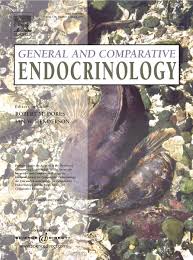 Research Areas include: Research Areas include:
Cellular mechanisms of hormone action
Functional, developmental, and evolutionary aspects of vertebrate and invertebrate endocrine systems
Neuroendocrinology
Reproductive biology
Instructions to Authors
General and Comparative Endocrinology publishes articles that use the comparative approach to study the complexity of vertebrate and invertebrate endocrine mechanisms at the molecular, cellular, and organismal levels of analysis. Submissions of manuscripts in the following areas are encouraged: endocrine regulation of physiological processes, the role of gene expression in endocrine systems, behavioral endocrinology, developmental endocrinology, environmental endocrinology, immunoendocrine interactions, comparative neuroendocrinology, and molecular interaction of hormones, neuropeptides, and their receptors.
The European Society for Comparative Endocrinology and the Division of Comparative Endocrinology have jointly devised the following statement, which guides the policy of the editors-in-chief in accepting manuscripts for publication:
Comparative endocrinology is the area in the field of regulatory biology in which one compares the structure, function, and mechanisms of action of endocrine glands and their hormones either among various groups of vertebrate and invertebrate animals or as elements in adaptive mechanisms. General and Comparative Endocrinology will consider all manuscripts of high quality, but first priority will be given to those which deal with comparative aspects of endocrinology. Manuscripts that do not include such comparisons will also be considered favorably if they deal with species other than laboratory mammals. Such manuscripts are of interest and contextual importance to comparative endocrinologists; few appropriate journals are available for their publication.
Cruelty to animals should be avoided whenever possible by use of proper anesthetics. However, we recognize that certain experiments will require the use of unanesthetized animals, but such experiments should be performed in a manner ensures a minimum of discomfort to the animals.
Submission of Manuscripts. Manuscripts must be written in English and should be submitted in triplicate (one original and two photocopies), including three sets of good-quality figures, to:
General and Comparative Endocrinology
Editorial Office
525 B Street, Suite 1900
San Diego, CA 92101-4495, USA
Telephone (619)699-6421
Fax:(619)699-6700
E-mail: gce@elsevier.com
Electronic Submission. Authors are requested to transmit the text and art of the manuscript in electronic form, via either computer disk, e-mail, or Ftp info, each time a new version is submitted. Submission as an e-mail attachment is acceptable provided that all files are included in a single archive the size of which does not exceed 2 megabytes (gce@acad.com). Hard-copy printouts of the manuscript and art that exactly match the electronic file must be supplied. The manuscript will be edited according to the style of the journal, and the authors must read the proofs carefully.
Manuscripts are accepted for review with the understanding that no substantial portion of the study has been published or is under consideration for publication elsewhere and that its submission for publication has been approved by all of the authors and by the institution where the work was carried out. Manuscripts that do not meet the general criteria or standards for publication in General and Comparative Endocrinology will be immediately returned to the authors, without detailed review.
Authors submitting a manuscript do so on the understanding that if the manuscript is accepted for publication, copyright in the article, including the right to reproduce the article in all forms and media, shall be assigned exlusively to the Publisher. The Copyright Transfer Agreements should be signed by the appropriate person.
Authors are responsible for obtaining permissions to reprint previously published figures, tables, and other material.
The types of manuscripts that the journal will accept for each review include Research Reports (normally manuscripts of 20 double-spaced typed pages), Short Communications in Genomics, in Proteomics, or on Techniques (limited to 10 double-spaced typed pages), Invited Review Articles (normally the same length as Research Reports), and Current Perspectives (limited to 8 double-spaced typed pages).
Research Reports describing hypothesis-driven projects in comparative endocrinology constitute the majority of the articles published in the journal. Research Reports should have the following sections: a brief Abstract that contains a concise statement of the results obtained; Keywords listed immediatly after the Abstract; Introduction; Methods; Results; Discussion; Acknowledgments; and References.
Communications in Genomics, in Proteomics, or on Techniques provide the author with a venue for presenting new data on gene sequences, hormone/neuropeptide structures, or technical innovations relevant to comparative endocrinologists. Short Communications in Genomics, in Proteomics, or on Techniques are limited to 10 double-spaced typed pages and three illustrations. These manuscripts should include the following sections: Abstract, Introduction, Results/Discussion, Methods, and References.
Invited Review Articles are intended to provide a detailed state-of-the-art view of subject areas in comparative endocrinology. The Editor for Reviews will provide authors with guidelines for the format and length of these research report-sized manuscripts.
The Current Prospectives section provides authors with a forum for discussing topics and trends in comparative endocrinology. These short articles should raise interesting or unanswered questions, present arguments about the significance of recent findings, describe the application and limitations of new methods and technologies, or consider potential interfaces between endocrinology and other disciplines in the sciences. These manuscripts are limited to 8 double-spaced typed pages and 2 illustrations and should include the following sections: Abstract, Introduction, appropriate headings, Conclusion, and References.
Preparation of Manuscript. Manuscripts should be double-spaced throughout on one side of 8.5 x 11-inch or A4 white paper. Pages should be numbered consecutively. The Title Page (p.1) should contain the article title, authors' names and complete affiliations, footnotes to the title, and the address for manuscript correspondence (including e-mail address and telephone and fax numbers).
References to the literature may be cited in the text, e.g., as Doe (1988) has observed that . . . ; (Doe, 1986); (Doe et al., 1987); (Doe, 1988, p. 250). Suffices a, b, etc., should be used following the date to distinguish two or more works by the same author(s) in the same year; e.g., Doe, 1988a,b. Literature citations in the bibliography should be arranged alphabetically according to the surname of the author. Journal abbreviations should be in accord with the most recent Chemical Abstracts Service Source Index.
Chang, C.-Y., Liu, Y.X., Zhu, Y.T., Zhu, H.H., 1985. The reproductive endocrinology of Amphioxus. In: Carlick, D.G., Korner, P.I. (Eds.), Frontiers in Physiological Research, Australian Academy of Science, Canberra, pp. 79-86.
Ganesh, C.B., Yajurvedi, H.N., 2002. Corticotropin-releasing factor antagonist attenuates stress-induced inhibition of seasonal ovarian recrudescence in the lizard Mabuya carinata. Gen. Comp. Endocrinol. 126, 144-152.
Kime, D., 1998. Endocrine Disruption in Fish. Kluwer Academic, Boston.
Figures should be in a finished form suitable for publication. Number figures consecutively with Arabic numberals, and indicate the top and the authors on the back of each figure. Lettering on drawings should be professional quality or generated by high-resolution computer graphics and must be large enough to withstand appropriate reduction for publication.
Color Figures. One color plate will be published free of charge in each article, provided color is deemed scientifically necessary by the reviewers and the Editorial Board. Additional color figures will be charged to the author. Mounted color must be submitted on paper or flexible board due to the nature of the reproduction process.
Cover Illustrations. Authors are encouraged to submit illustrations that may be appropriate as journal cover art. Such illustrations should include an appropriate legend and be identified as potential cover material. These illustrations must be relevant to the mission of General and Comparative Endocrinology.
Tables should be numbered consecutively with Arabic numerals in order of appearance in the text. Type each table double-spaced on a separate page with a short descriptive title typed directly above and with essential footnotes below. Authors should submit complex tables as camera-ready copy.
Proofs will be sent to the corresponding author. To avoid delay in publication, only necessary changes should be made, and proofs should be returned promptly. Authors will be charged for alterations that exceed 10% of the total cost of composition.
Editorial Board
Editors-in-Chief:
R.M. Dores, Department of Biological Sciences, University of Denver, Colorado, USA
I.W. Henderson, Institute of Endocrinology, Department of Animal and Plant Sciences University of Sheffield, United Kingdom
Editor for Review Articles:
F.L. Moore, Oregon, USA
Editor for Book Reviews:
A. Gorbman, Washington, USA
Editors:
R. Balment, Manchester, United Kingdom
J.A. Brown, Devon, United Kingdom
E. Chang, California, USA
R. Denver, Michigan, USA
W. Dickhoff, Washington, USA
C. Duan, Michigan, USA
G. Flik, Nijmegen, The Netherlands
F. Gracia-Navarro, Cordoba, Spain
O. Kah, Rennes, France
W. Kloas, Berlin, Germany
S. McCormick, Massachusetts, USA
M. Moore, Arizona, USA
Y. Nagahama, Okazaki-shi, Japan
D.O. Norris, Colorado, USA
R. Pierantoni, Naples, Italy
E. Plisetskaya, Washington, USA
P. Prunet, Rennes, France
L. Riddiford, Washintgon, USA
E. Roubos, Nijmegen, The Netherlands
M. Sheridan, North Dakota, USA
J. Specker, Rhode Island, USA
C.V. Sullivan, North Carolina, USA
Y. Takei, Tokyo, Japan
J. Trant, Maryland, USA
A. Urano, Sapporo, Japan
G. van der Kraak, Guelph, Canada
H. Vaudry, Rouen, France
J. Wingfield, Washington, USA
J. Youson, Toronto, Canada
Editorial Board:
H.A. Bern, California, USA
S. Boyd, Indiana, USA
D. Bradshaw, Perth, Australia
J. Chang, Edmonton, Canada
J.M. Conlon, Nebraska, USA
D. Crews, Texas, USA
A. DeLoof, Leuven, Belgium
P. Deviche, Arizona, USA
H. Goos, Utrecht, The Netherlands
L. Guillette, Florida, USA
W. Hanke, Karlsruhe, Germany
T. Hayes, California, USA
N. Hazon, St. Andrews, Scotland
T. Hirano, Tokyo, Japan
J.M.P. Joss, Sydney, Australia
H. Kawauchi, Sanriku-cho, Japan
S. Kikuyama, Tokyo, Japan
M. Kobayashi, Tokoy, Japan
V. Lance, California, USA
D. Larhammar, Uppsala, Sweden
D. Lovejoy, Ontario, Canada
R. Millar, Edinburgh, Scotland
I. Parhar, Tokyo, Japan
R. Patino, Texas, USA
R. Peter, Edmonton, Canada
A. Polzonetti-Magni, Camerino, Italy
M. Rand-Weaver, Brunel, United Kingdom
P.J. Sharp, Midlothian, United Kingdom
S. Sower, New Hampshire, USA
S. Tobe, Toronto, Canada
S.E. Wendelaar, Nijmegen, The Netherlands
B.J. Yu, Taipei, Taiwan
Y. Zohar, Maryland, USA
|


